Ilhabela, Brazil
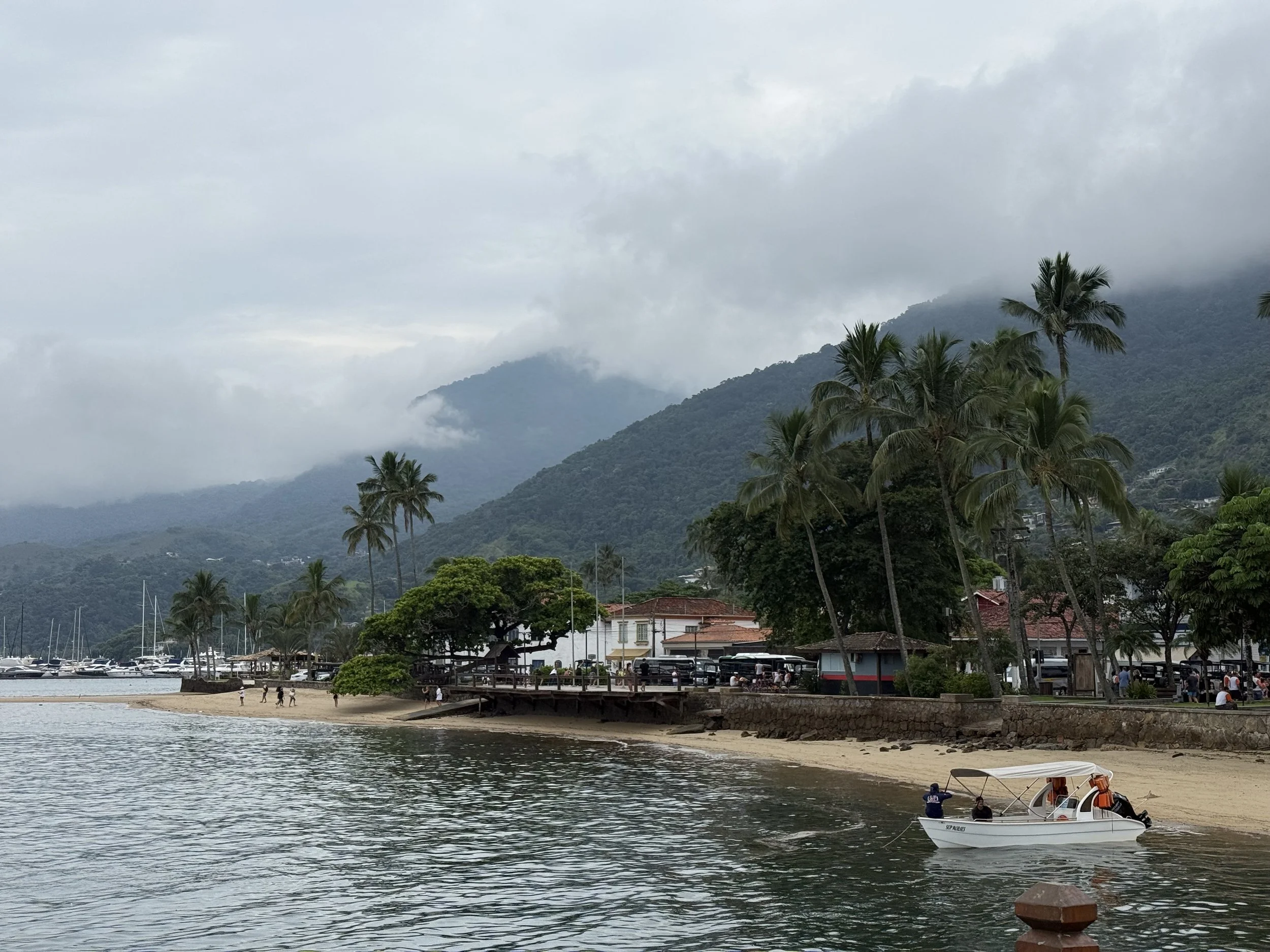
São Sebastião (St. Sebastian) Island, Ilhabela, Brazil
I arrived in Ilhabela by cruise ship. Because the island does not have a large port, ships anchor offshore and passengers are brought in by tender boat.
Once off the tender, you walk up a short dock that places you near Praia de Santa Tereza, a quiet, family-friendly beach close to the historic center of Ilhabela, known as Vila. It is a calm introduction to the island before heading further out.
About Ilhabela
While most visitors spend their time on the main island, Ilhabela is actually an archipelago made up of twelve islands and several smaller islets. The largest of these is São Sebastião Island, which holds the town center and most of the population. The other islands, such as Búzios, Vitória, and Pescadores, are much smaller and less developed, often home to small traditional communities.
This group of islands is a protected area, with about 85% of the land designated as the Ilhabela State Park. This preservation is the reason the interior remains covered in dense Atlantic Rainforest, with over 300 species of birds and hundreds of waterfalls. Because there are no bridges connecting the archipelago to the mainland, the only way to reach it is by the ferry system from the city of São Sebastião.
Getting to Jabaquara Beach
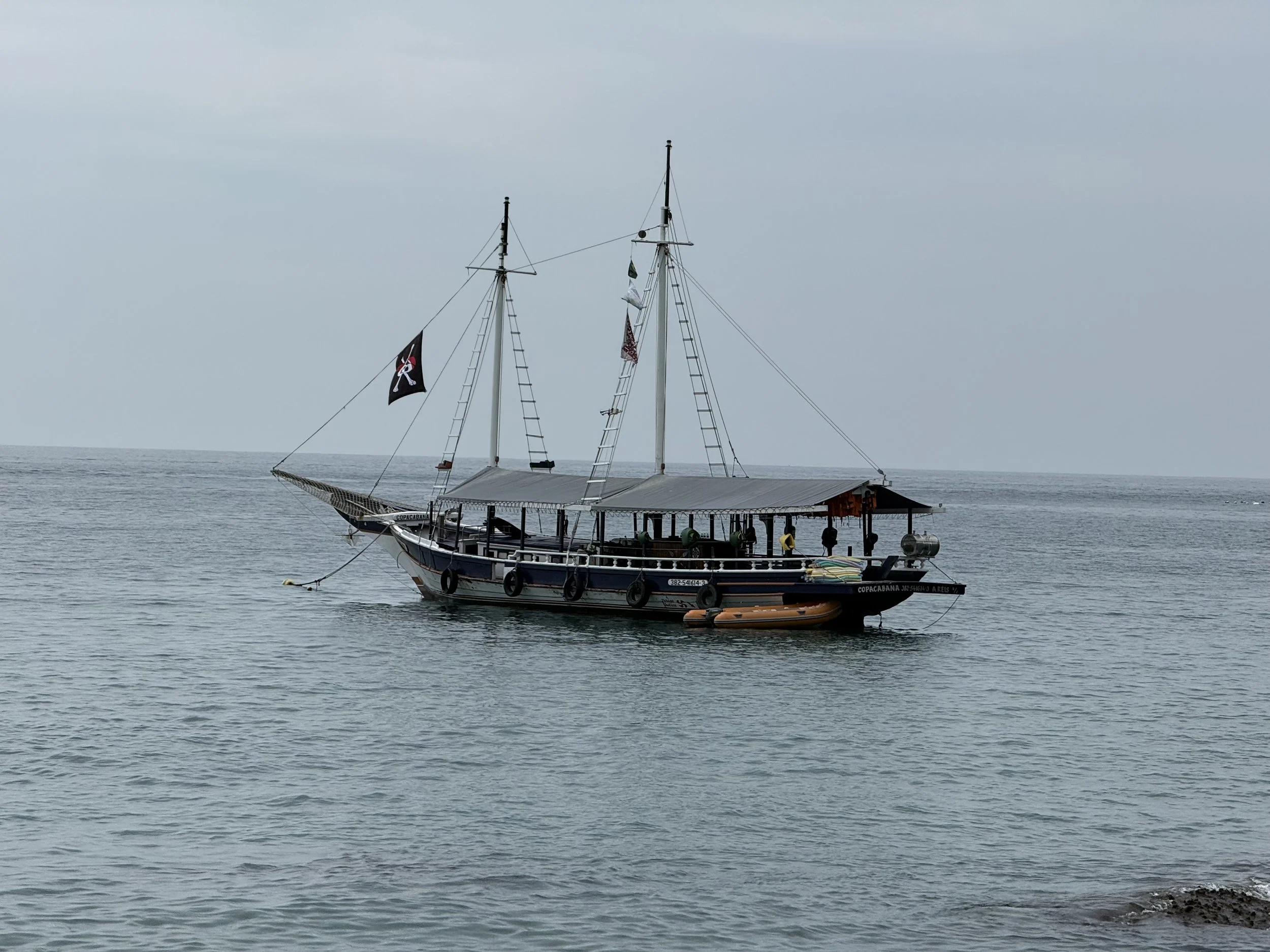
After tendering in, we walked from the dock to another departure point where we boarded a schooner headed to Jabaquara Beach.
The schooners here are traditional wooden boats, long and low with open sides, bench seating, and a covered canopy for shade. They feel more like something built for leisure rather than speed.
The ride took about an hour. The schooner towed a smaller boat behind it, which would later be used to shuttle people from the anchored vessel to shore.
On board, there was a long wooden serving trough filled with sliced watermelon. You could take pieces as you wanted, along with bottled water that was set out nearby. It was simple, but after the walk and the heat, it worked. There were also restrooms on board, though the flushing system was only partially functional.
The weather was overcast and a little rainy when we arrived, but it did not take away from the experience.
As we got closer to shore, the guide explained that we could either swim from the schooner to the beach or wait for the smaller boats. I waited.

The Bugs
Before we got off the boat, the guide gave a very specific warning about the bugs in the area.
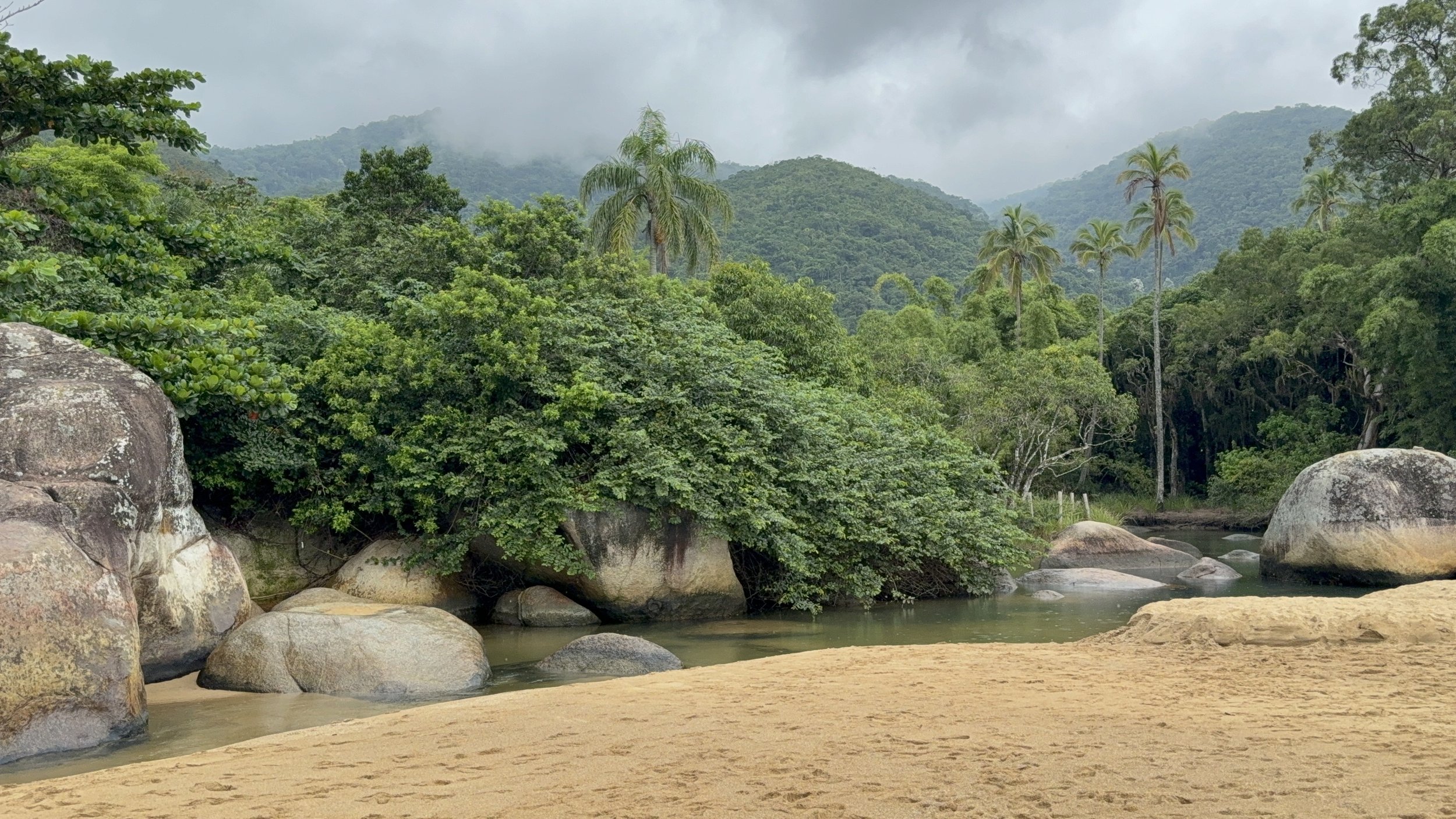
There is a small river, Rio Jabaquara, that runs through the beach and into the ocean. That mix of fresh and salt water creates the kind of environment where insects thrive.
The main ones here are mosquitoes and biting midges, known locally as borrachudos. In other places, they are often called no-see-ums. They are small enough that you do not always notice them right away, but their bites are hard to ignore later.
Bug spray was strongly recommended.
I did not have any, which ended up being a mistake. My legs, arms, feet, and even parts of my torso were covered in bites by the end of the visit.
What stood out was how the bites behaved. They did not itch immediately, but I noticed small spots of blood forming where I had been bitten. That comes from the borrachudos, whose saliva prevents the blood from clotting at the bite site.
At the time, it did not seem like a big deal. By the next day, it was.
The itching set in all at once, and there was not much you could do except wait it out. Scratching only makes it worse.
People who used repellent still got a few bites, but far fewer. The bugs will go after any patch of skin you miss, so coverage matters.
Jabaquara Beach
The beach itself is worth the effort to get there.
The sand is darker than what you might expect if you are used to Caribbean beaches. Not white and powdery, more coarse with a slightly golden tone. The water had a muted green color. It was not crystal clear, but it was clean enough to swim in.
What stood out more was the setting. The beach is backed by dense vegetation and hills, which makes it feel more enclosed and quieter than expected. There are no large resorts or long stretches of development. Just small pockets of activity surrounded by a lot of green.
It does not feel like a polished beach destination. It feels more natural and a bit removed, like somewhere you have to go out of your way to reach.
There are chairs, tables, and umbrellas available along the beach, and after the boat ride they are tempting. Just know they are not free.
Further down the beach is a small setup called Espaço Tangará Ilhabela. This is where you will find a restaurant, bathrooms, showers, and a small shop. There are signs pointing to everything, including a cashier area, which reinforces that while the beach feels remote, parts of it are organized and operated by local businesses.
English is not widely spoken here. You may come across someone who knows a little, but it is not something to rely on. Having a translation app makes things easier if you do not speak Portuguese.
Heading Back
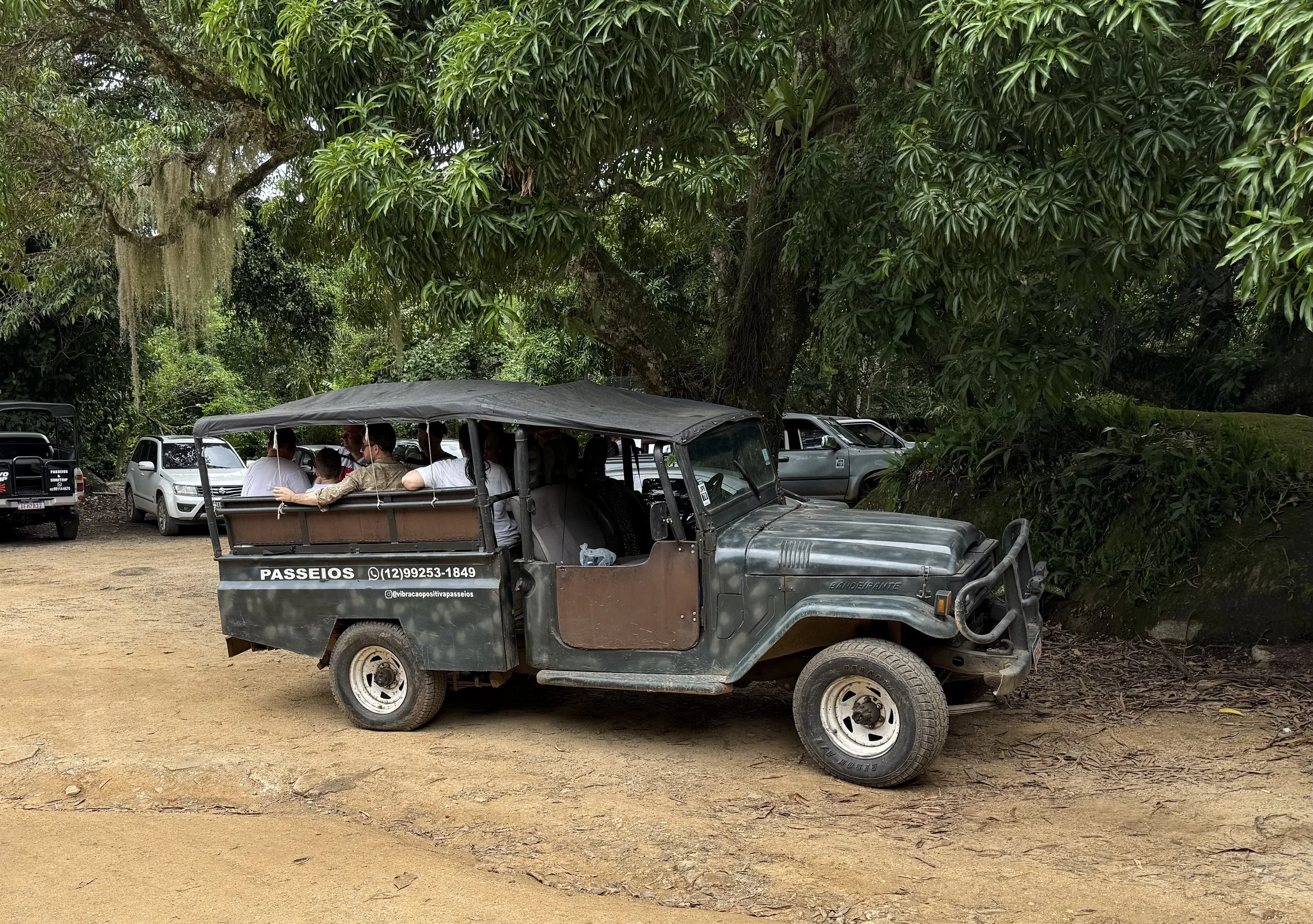
We did not take the schooner back. Instead, we returned by jeep, which ended up being one of the more interesting parts of the day.
It gave a completely different view of the island compared to arriving by water, passing through more inland areas and giving a better sense of how green and mountainous Ilhabela actually is.
On the way back, we made a quick stop at the Ilhabela sign to take photos. It is a short stop, but one of those standard moments you include in the day.
They also mentioned the singing rocks, which are said to sound like bells when struck, one of those small local details that sticks with you.
Back in Town
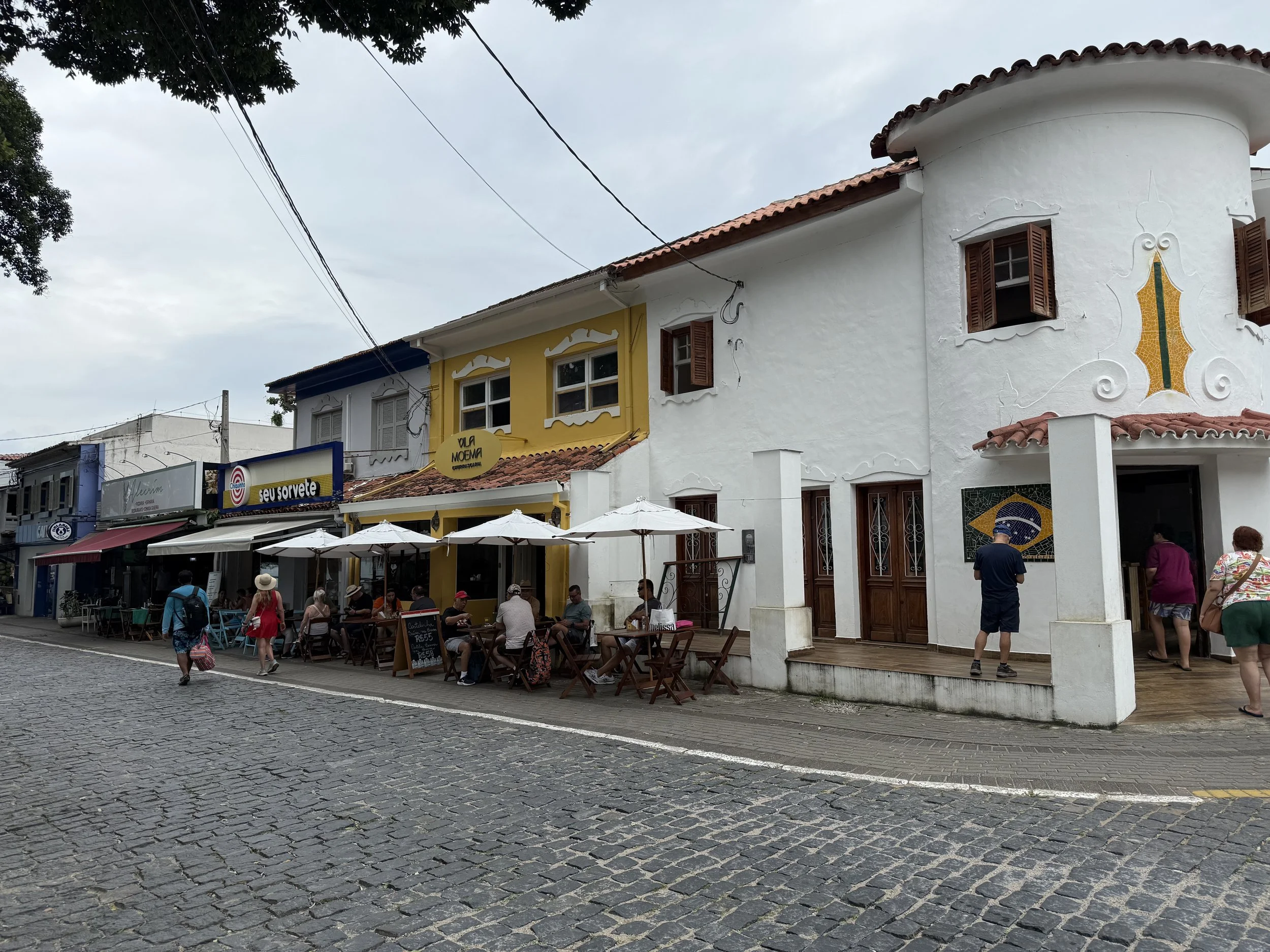
The area has that familiar beach town feel. Things move a little slower, but there is still enough going on to keep you engaged. There are shops, restaurants, and places where people are just sitting, talking, or taking a break from the heat.
Nothing feels rushed. It is the kind of place where you can move without a plan and still feel like you are doing something.
We ended up stopping for food and trying a few local options.
I stopped at Free Port Cafe for a chocolate ball called a brigadeiro. It is rich, dense, and much heavier than it looks. Made with sweetened condensed milk, cocoa powder, butter, and chocolate sprinkles, they are a chocolate lovers dream.
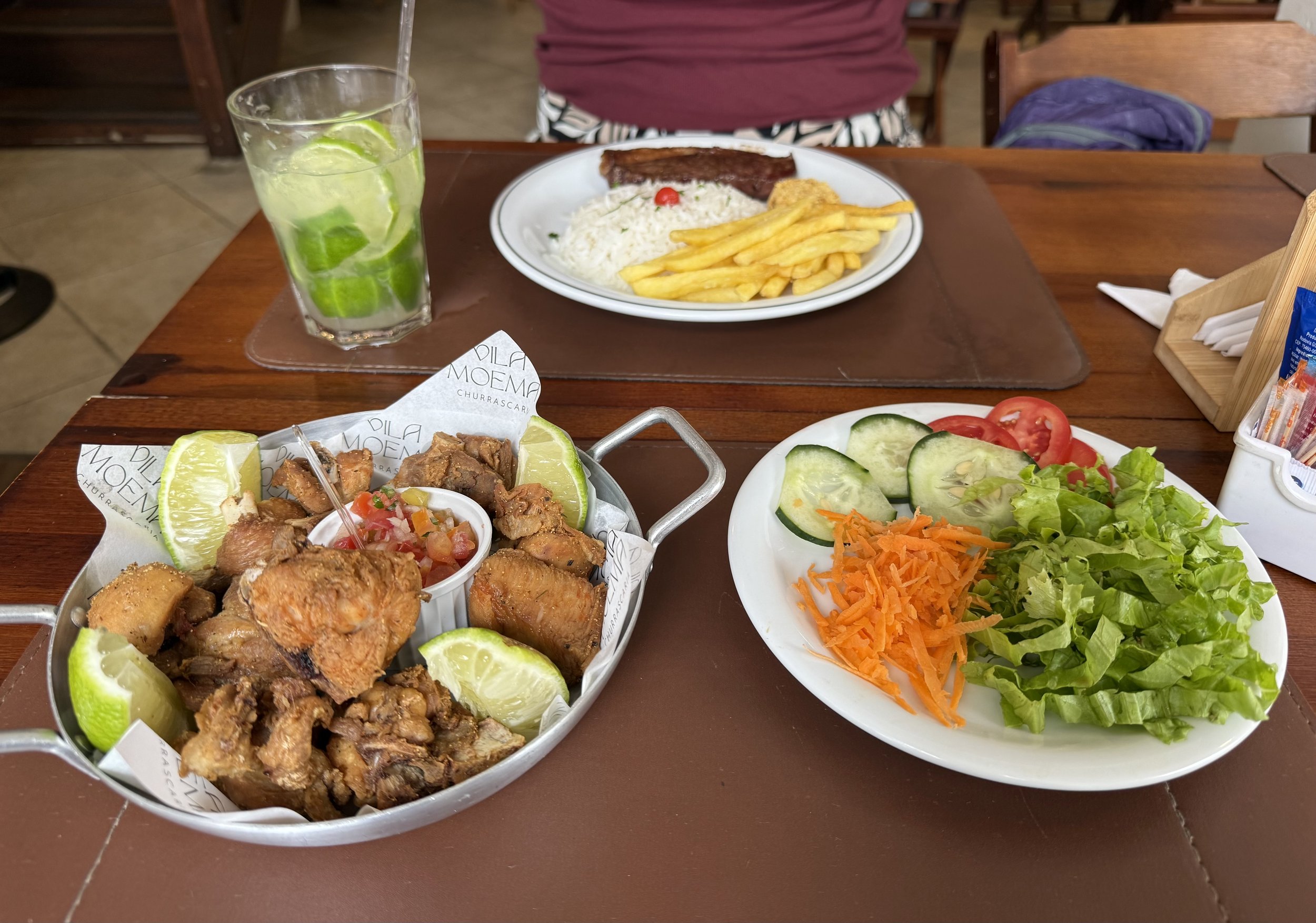
Nearby at Vila Moema Churrascaria, a bright yellow building in the historic center, I stopped for a meal. As a sit down restaurant, it offers a more structured experience with grilled meats being cooked over open heat. They were simple and well-seasoned. It fit the setting perfectly: something local and then back to walking.
Local Guide: Eating and Living Like a Local
The Vila Experience: The historic center, or Vila, is the island social hub. Beyond the main waterfront, look for the Igreja Matriz de Nossa Senhora d’Ajuda, a church built in the 1800s with a grand staircase. Walking the side streets near Praia de Santa Tereza reveals more of the traditional architecture and the lifestyle of the permanent residents.
Island Flavors: While the Free Port Cafe is a primary spot for brigadeiros, these sweets are often paired with a strong cafezinho (small coffee) during mid-afternoon breaks. Look for local variations that might use coconut or nuts.
Traditional Dining: Vila Moema Churrascaria offers the rodizio style of service common in Brazil, where different cuts of meat are served at the table. If you prefer a fixed meal, many sit down spots also offer a prato feito, a standard plate with rice, beans, a protein, and farofa (toasted cassava flour).
The Singing Rocks: Known locally as Pedra do Sino, these phonolite rocks are located on the northern coast. There is a wooden walkway leading to the site. If you strike the rocks with a small stone, they emit a metallic, bell-like ring.
Caiçara Culture: The local culture is rooted in the Caiçara heritage, which is a blend of indigenous, European, and African influences. Learning basic Portuguese greetings like Bom dia (Good morning) or Obrigado (Thank you) is helpful when visiting smaller, family-run establishments.
⸻
Things to Do
Visit Jabaquara Beach for a more remote beach experience.
Stay near Vila for an easier, walkable day with shops and restaurants.
Walk along the waterfront near the tender area.
Stop at the Ilhabela sign for photos.
Try local food from small restaurants or sit down spots like Vila Moema Churrascaria.
If you have more time, look into waterfalls and hiking areas inland.
Getting Around
The area near the tender dock and Vila is walkable.
Beaches like Jabaquara require transportation or an organized excursion.
Boat tours are a common way to reach more remote beaches.
Jeeps and local drivers are used for inland travel.
Plan extra time to return to the ship due to tendering.
Currency
The local currency is the Brazilian Real (R$).
Credit cards are accepted in most restaurants and shops near Vila.
Cash is useful for beach setups, small vendors, and tips.
Prices are generally reasonable compared to U.S. tourist destinations.
Safety
Ilhabela felt safe in the main areas near the port and Vila.
Stay aware of your surroundings, especially in crowded areas.
Keep personal items secure while walking through shops and along the waterfront.
The biggest concern is environmental.
Bug bites at Jabaquara Beach can be significant without repellent.
Be mindful of water conditions and weather when swimming.
Other Things to Consider
This is a tender port, so getting on and off the ship takes time.
Excursions like Jabaquara Beach take up most of the day.
Beach chairs and umbrellas are not free.
English is not widely spoken.
A translation app can be helpful.
Bug spray is essential for certain areas of the island.
Weather can change quickly, including rain.