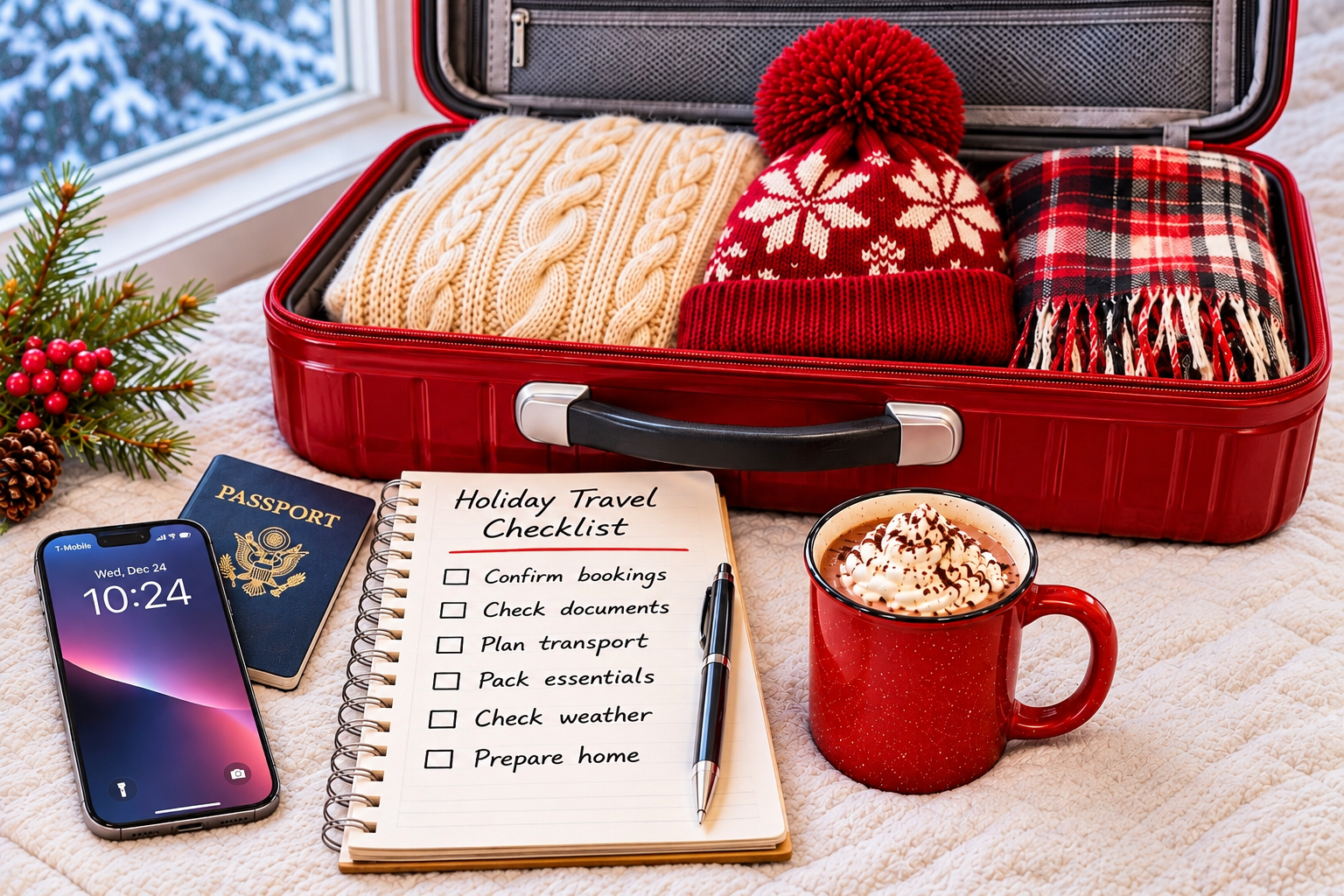
As the holiday season descends upon us, it can feel as if time goes into overdrive. With to-do lists aplenty and schedules to coordinate, it’s easy to forget a thing or two as we gear up for our annual festivities.
Whether you’re getting the house ready for guests or gearing up for a flight, a train ride, or a road trip, there’s plenty to sort out. If you’re hosting, it might be as simple as finding out when everyone gets in and who needs a ride. If you’re heading out of town, take a look at what’s happening where you’re headed. A local holiday might change the train schedule, and the heavy coat you wear out the door might spend the rest of the trip sitting in your suitcase.
So, before the suitcases come out and the guests start arriving, let’s take it from A to Z. Here are the things to think about as you make your plans, get ready to go, and sort out the trip home:
A — Availability, accessibility, and arrival time
Availability. Confirm when hosts can have you, when travel companions can get away, and which events have fixed dates before anyone pays a deposit.
Accessibility. Check step-free routes, boarding assistance, and accessible bathrooms at each point where you’ll need them. Ask how far ahead to arrange assistance.
Arrival time. Work backward from your carrier’s recommended arrival time and check-in deadlines. Allow for holiday traffic, parking, queues, and the walk to your gate or platform.
B — Budget, bookings, and backup plans
Budget. Price the whole trip, including accommodation, baggage, meals, parking, and transport at both ends. If you can, set aside money for an unexpected ride or overnight stay.
Bookings. Identify the hardest part to replace, whether it’s a room near family, an event ticket, or a seat on a limited ferry service. Make sure the other pieces fit before committing. For overnight trips or journeys across time zones, double-check the local arrival date before reserving a room or arranging a pickup.
Backup plans. Save a later departure, an alternate route, or a place you could stay overnight. If you’re driving, check official road reports before taking a detour.
C — Calendars, connections, and carry-ons
Calendars. Check school breaks, public holidays, and major events at home, at your destination, and at stops along the way. Use those dates to anticipate crowds and closures.
Connections. Allow time for border checks, baggage collection, and transfers between terminals or stations. If you book separate tickets, find out what happens if a delay on one leg makes you miss the next.
Carry-ons. Keep medication, travel documents, a charger, and a change of clothes in the bag that stays with you. Put anything you’ll need during the journey within easy reach.
D — Documents, deadlines, daylight, and destination advisories
Documents. Check passport validity, entry and transit requirements, and any consent documents a child may need when travelling with one parent or another adult. Make sure booking names match travel documents.
Deadlines. Put renewals, final payments, cancellation cutoffs, and check-in dates on one calendar. If you’re travelling as a group, agree on who’s handling each booking.
Daylight. If you’re driving an unfamiliar route during a season with short days, aim to cover the trickiest stretches before dark.
Destination advisories. Check official travel advisories for your destination and any countries you’ll pass through. Save local emergency numbers and, if you’re abroad, the contact details for your embassy or consulate.
E — Events, early departures, and emergency supplies
Events. Confirm dates and reservation requirements. If a celebration ends late, work out how you’ll get back to where you’re staying.
Early departures. When comparing options, look at what’s available later the same day. An earlier departure may leave you more ways to continue if your first service is cancelled.
Emergency supplies. For a road trip, bring water, snacks, a torch or flashlight, and a way to charge your phone. Add a blanket and ice scraper for freezing weather or extra drinking water for hot, remote stretches.
F — Flexible bookings and food
Flexible bookings. Compare the cost of a flexible rate with what you’d lose if plans changed. Check the deadline, whether you’d get a refund or credit, and whether you’d owe a fare difference.
Food. Reserve any meal the trip revolves around. Carry snacks and a refillable bottle for long waits or late arrivals. If you’re crossing a border, check which foods you can bring in.
G — Group plans, gifts, and gear
Group plans. Agree on a budget, shared activities, and how you’ll split costs before anyone pays. Leave room for people to spend part of the trip on their own.
Gifts. Decide what to carry, ship ahead, or buy locally. Pad fragile items, consider wrapping gifts after arrival, and check customs rules for anything you’ll take across a border.
Gear. Compare baggage fees for bulky items such as skis or boots with the cost of renting or borrowing them at your destination.
H — Hosts, hotels, and holiday hours
Hosts and hotels. Agree on arrival and departure dates with your hosts. If you’re booking a hotel, factor in the time and cost of getting to the people or places you came to see.
Holiday hours. Confirm the hours of the shops, pharmacies, and rental counters you’ll rely on. Check the dates you’ll actually be there, including the day you leave.
I — Insurance, illness, and itinerary
Insurance. Check who and what your travel policy or card benefit covers, which disruptions and activities it excludes, and what records you’d need to make a claim.
Illness before departure. Agree on what you’ll do if someone gets sick just before the trip. Know which bookings can still be moved and how you’ll contact hosts or travel companions.
Itinerary. Keep bookings, addresses, and check-in details together. Share your route and expected arrival with travel companions and anyone waiting for you.
J — Journey time and journey entertainment
Journey time. Compare direct and connecting trips door to door. Include getting to the terminal, waiting, changing services, and reaching your accommodation. A shorter flight or train ride can still mean a longer day.
Journey entertainment. Download a book, podcast, show, or game before leaving so you have something to do during a long wait without Wi-Fi.
K — Kids and keeping routines
Kids. Plan for realistic meal, sleep, and rest breaks. Keep snacks, spare clothes, and a favourite toy or comfort item in a bag you can reach.
Keeping routines. If someone needs regular meals, medication, or downtime, account for that when choosing departure times and booking activities.
L — Leave, last-mile transport, and luggage
Leave. Confirm time off before buying tickets. If you’re due back at work or school soon after you return, consider how much room you have for a delay.
Last-mile transport. Check when the final bus, train, or ferry leaves. Save a backup and confirm where to meet your ride, especially if you’ll arrive at night.
Luggage. Check each operator’s baggage allowance before picking a fare. Save the receipt for checked luggage and take a photo of your bag so you can describe it if it’s delayed. If you’d like to use a luggage tracker, check your carrier’s rules before packing it.
M — Maps and medication
Maps. Download maps and save tickets, addresses, and important numbers where you can find them without a signal.
Medication. Plan refills around holiday closures and pack enough for a delay if you can. If you’re crossing a border, check whether your medication is permitted and whether you need supporting documents.
N — Neighbourhoods and night arrivals
Neighbourhoods. Look at where you’ll actually spend your time. A cheaper room farther away may cost more once you add daily rides or parking.
Night arrivals. Arrange after-hours access to your accommodation and save the instructions offline. Check whether food or basic supplies will be available nearby when you arrive.
O — Off-peak dates, opening days, and overnight bags
Off-peak dates. If you can shift the trip, compare nearby dates for both transport and accommodation. Include the cost of any extra night and check whether onward services will be running.
Opening days. Look up the dates for any attractions, markets, or restaurants central to the trip. Plan around the ones with limited opening days.
Overnight bags. On a road trip, keep toiletries, sleepwear, and a change of clothes together so you can grab them quickly if you stop overnight.
P — Pets, parking, power, and pre-departure health
Pets. Arrange a sitter or boarding, or confirm that your transport and accommodation accept pets. For international trips, check pet entry requirements before committing to dates.
Parking. Check overnight parking at your accommodation and whether terminal parking needs a reservation.
Power. Bring the charging cables and plug adapter you’ll need. If you’re flying with a power bank, check your carrier’s rules before packing it.
Pre-departure health. For international travel, check official destination health guidance early enough to arrange any appointments you may need.
Q — Questions and queues
Questions. Ask about details that could change your booking, such as whether adjoining rooms are guaranteed, a child seat is available, or late arrival affects a reservation. Save the answers with your booking.
Queues. Check whether your departure point posts wait times or offers screening reservations. Keep tickets and identification handy as you approach the front.
R — Road conditions and rental cars
Road conditions. Plan driving days with time for meals, fuel or charging, and rest. Check official road reports before departure, especially for mountain passes, flood-prone roads, or remote stretches.
Rental cars. Compare the total price, including pickup and drop-off fees and any equipment you need. Confirm that the rental company accepts your driving licence and payment card, check the deposit and counter hours, and ask whether you need permission to cross a border. Check local winter equipment requirements where applicable.
S — Spending abroad, staying connected, and shoes
Spending abroad. Check how you’ll pay for transport, meals, and accommodation. Find out whether you’ll need local cash on arrival and factor any card fees into your budget.
Staying connected. Check your mobile coverage before departure. Decide whether you’ll need another way to get online for directions, tickets, or messages.
Shoes. Choose footwear you can walk comfortably in on wet pavement, slush, or uneven ground. Keep dry socks handy and bring a separate bag for wet gear.
T — Temperature changes, local transport, and the trip home
Temperature changes. Pack for the climates you’ll pass through. Keep a jacket or light layer within reach so you can adjust without opening your main bag.
Transport at your destination. Decide how you’ll get around once you arrive. Check holiday timetables for day trips, late gatherings, and early starts.
The trip home. Check the return schedule separately. Work backward from your first departure to allow time for checkout, the rental return, or an early ride.
U — Updates and understanding your options
Updates. Turn on carrier alerts and check your departure status before leaving. Confirm changes in the carrier’s app or on station displays before heading to a different gate or platform.
Understanding your options. Find out what your carrier offers if it cancels your trip, how to request a refund or rebooking, and whether you need to contact the original seller. Check each reservation separately if you booked the legs independently. If plans change, update anyone expecting you and keep receipts for expenses you may be able to claim.
V — Vehicle checks and visits
Vehicle checks. Before a long drive, check tyres, lights, wipers, and washer fluid. Map fuel or charging stops on remote routes and check their holiday hours.
Visits. Ask friends or family which gatherings matter most and how much time they’ve set aside. Leave some open time so one late arrival doesn’t shift every visit.
W — Weather along the way
Use typical seasonal conditions when choosing dates and activities. Closer to departure, check forecasts and official alerts at your starting point, destination, and stops in between. Pay particular attention to ferry crossings, exposed roads, and other stretches where wind, flooding, snow, or poor visibility could change your route.
X — eXtra time where it counts
Consider arriving a day early for a wedding, family celebration, cruise departure, or other commitment you can’t move. If you arrive on schedule, use the extra time to get settled.
Y — Your home while you’re away
Arrange plant watering, parcel collection, or a check-in if needed. Confirm who has keys and how to reach you, and leave instructions for anything that needs attention while you’re gone.
Z — Zzzs and recovery time
Consider how much sleep each departure option leaves you, especially if you’ll drive after arriving. If you get drowsy behind the wheel, pull over somewhere safe to rest or switch drivers. Leave some time to recover before your first big activity or your return to work or school.