Amsterdam Netherlands
My trip to Amsterdam started in Chicago. It was a family trip, and Amsterdam served as our embarkation point for a 12-night Baltic Sea cruise. We had a connecting flight in Dublin, where we cleared customs before boarding a short flight to Amsterdam.
When we landed that morning, we took a few photos in front of the large red-and-white I amsterdam sign outside the airport, which at the time was part of a city tourism campaign and one of the most photographed spots for visitors. There is a train that runs directly from Amsterdam Schiphol Airport into the city, but we chose to take a cab instead.
The ride was quick, and before long we reached the W Amsterdam, a comfortable hotel near Dam Square with easy access to many of the city’s main attractions. After checking in, we spent the rest of the day exploring on foot.
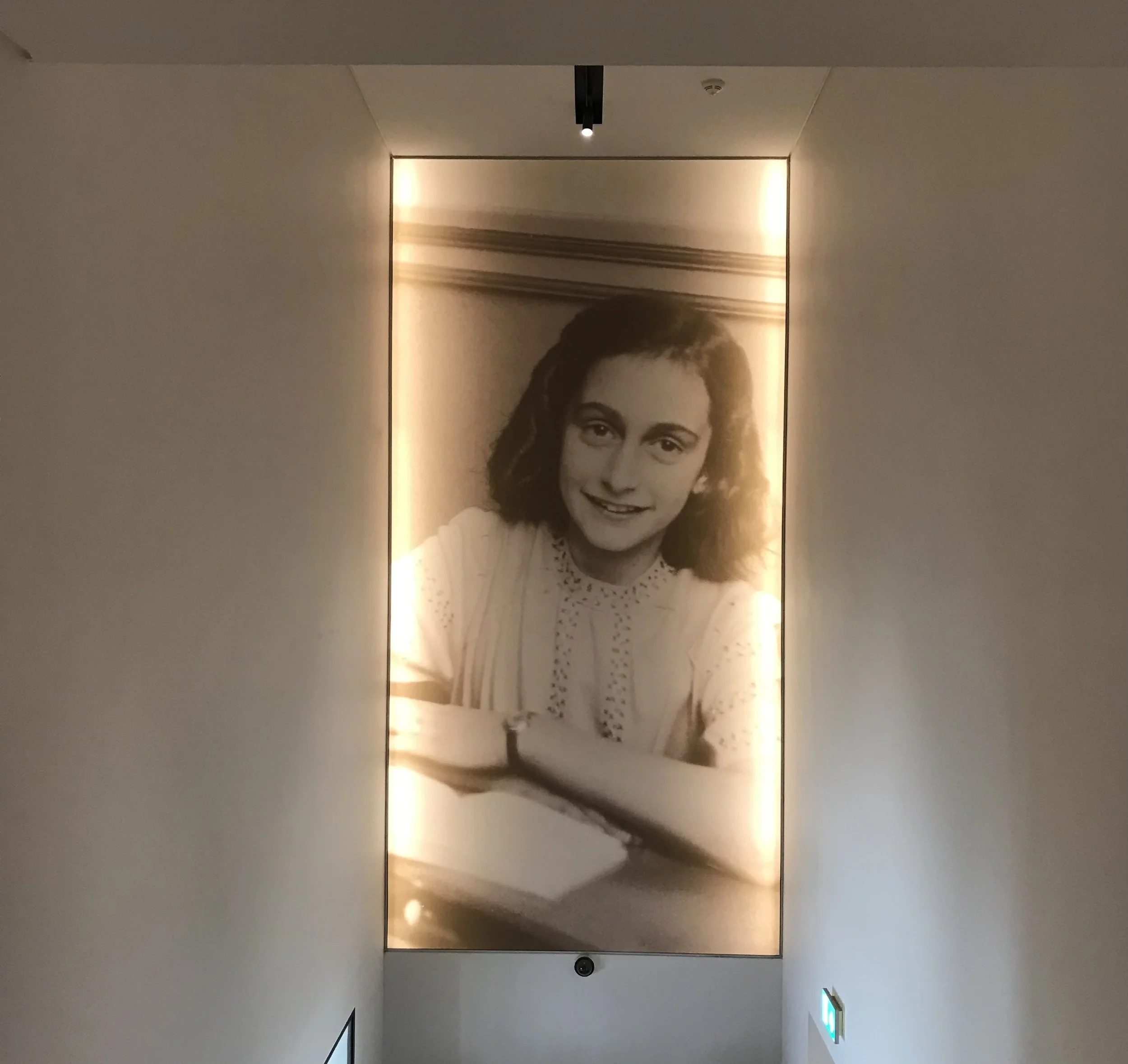
Our first stop was the Anne Frank House (Anne Frank Huis), one of Amsterdam’s most visited and historically significant sites. Inside, visitors walk through the narrow rooms where Anne Frank and her family hid during World War II. The exhibits are simple but powerful, with photos, diary pages, and historical documents that tell the story of the Frank family and the people who helped them. The rooms remain mostly unfurnished, which makes the experience even more haunting. It is a small space, preserved much as it was, and standing there makes the story feel very real. This was the only site where I took the official tour, however I passed several other landmarks nearby, including the Westerkerk (Western Church), whose bell tower Anne mentioned hearing from the attic.
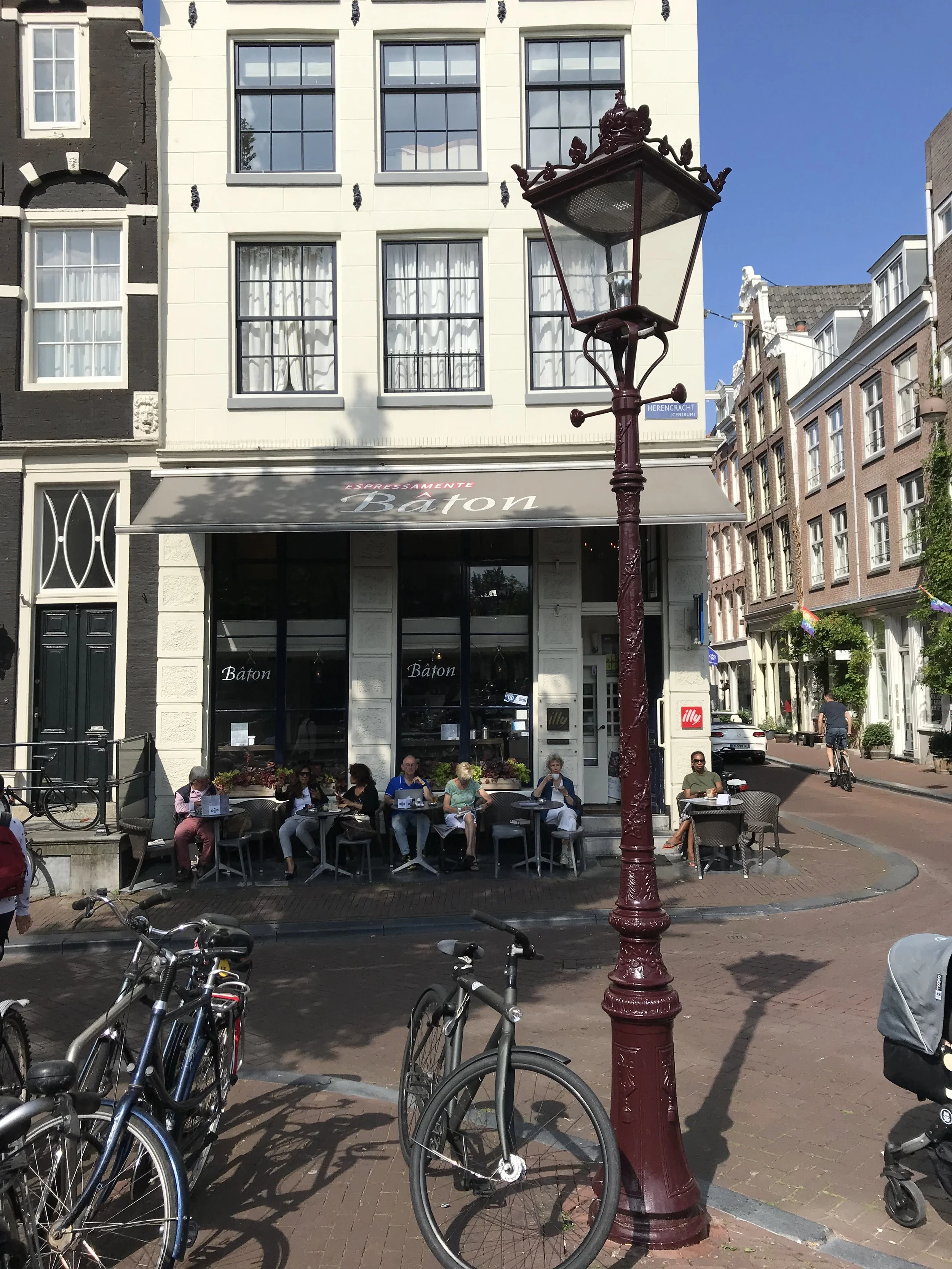
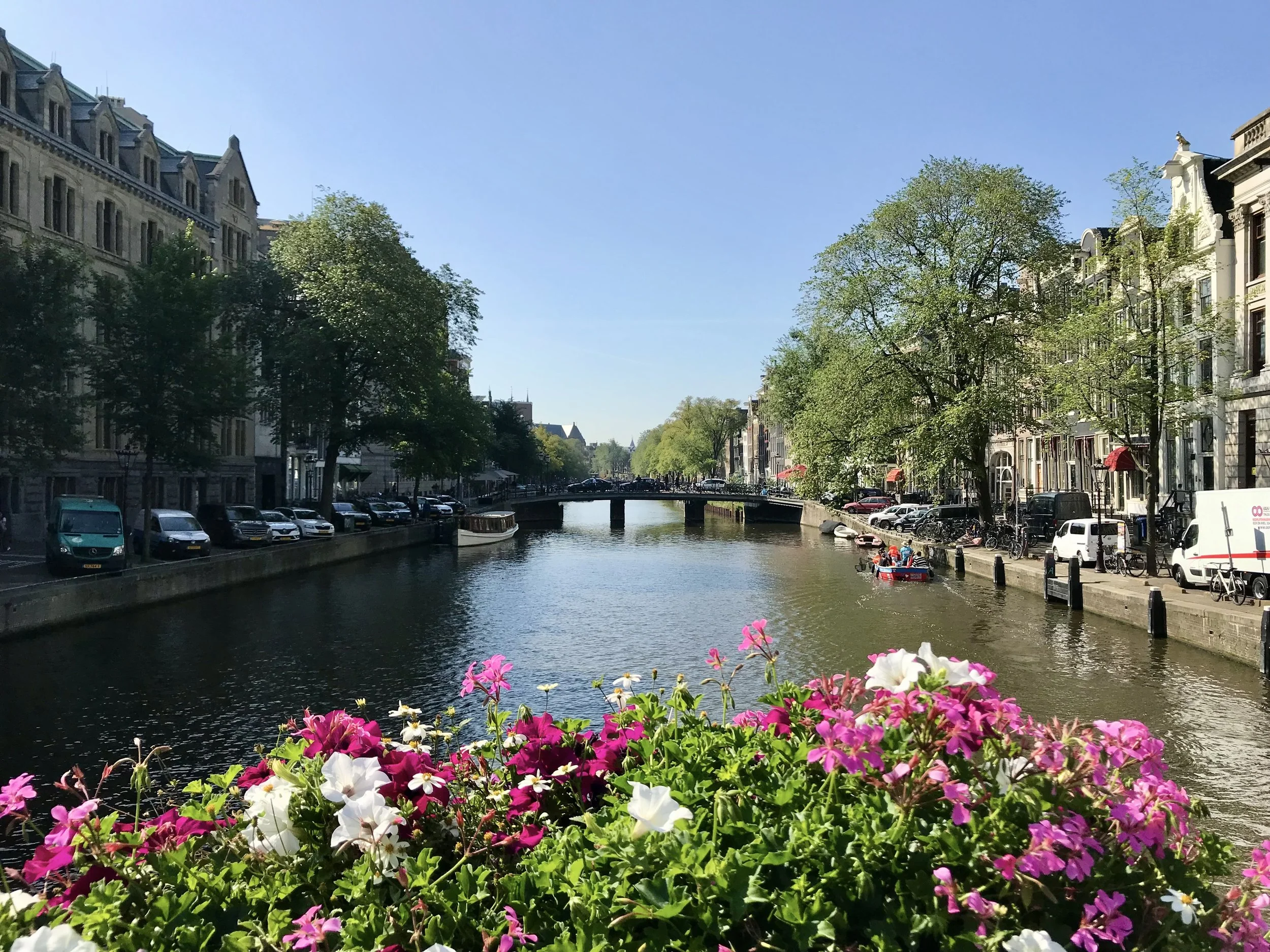
After leaving the museum, we stopped for lunch at Espressamente Baton, a cozy two-level café that blended modern design with a warm, comfortable feel. The first floor was smaller and housed the coffee counter and pastry display, where customers ordered sandwiches, espresso, and desserts. Upstairs, the seating area was more open, with high ceilings, a chandelier hanging over a long wooden table, and large windows that filled the room with natural light. The space felt calm and inviting, the kind of place where we could linger over lunch and enjoy a quiet moment above the street below. From there, we continued toward the Herengracht Canal and the wider Canal District (Grachtengordel). The area is lined with tilted houses, arched bridges, and calm waterways that make it one of the city’s most photogenic spots. The canals loop around the center in perfect symmetry, and even a short walk shows why this area is a UNESCO World Heritage Site.
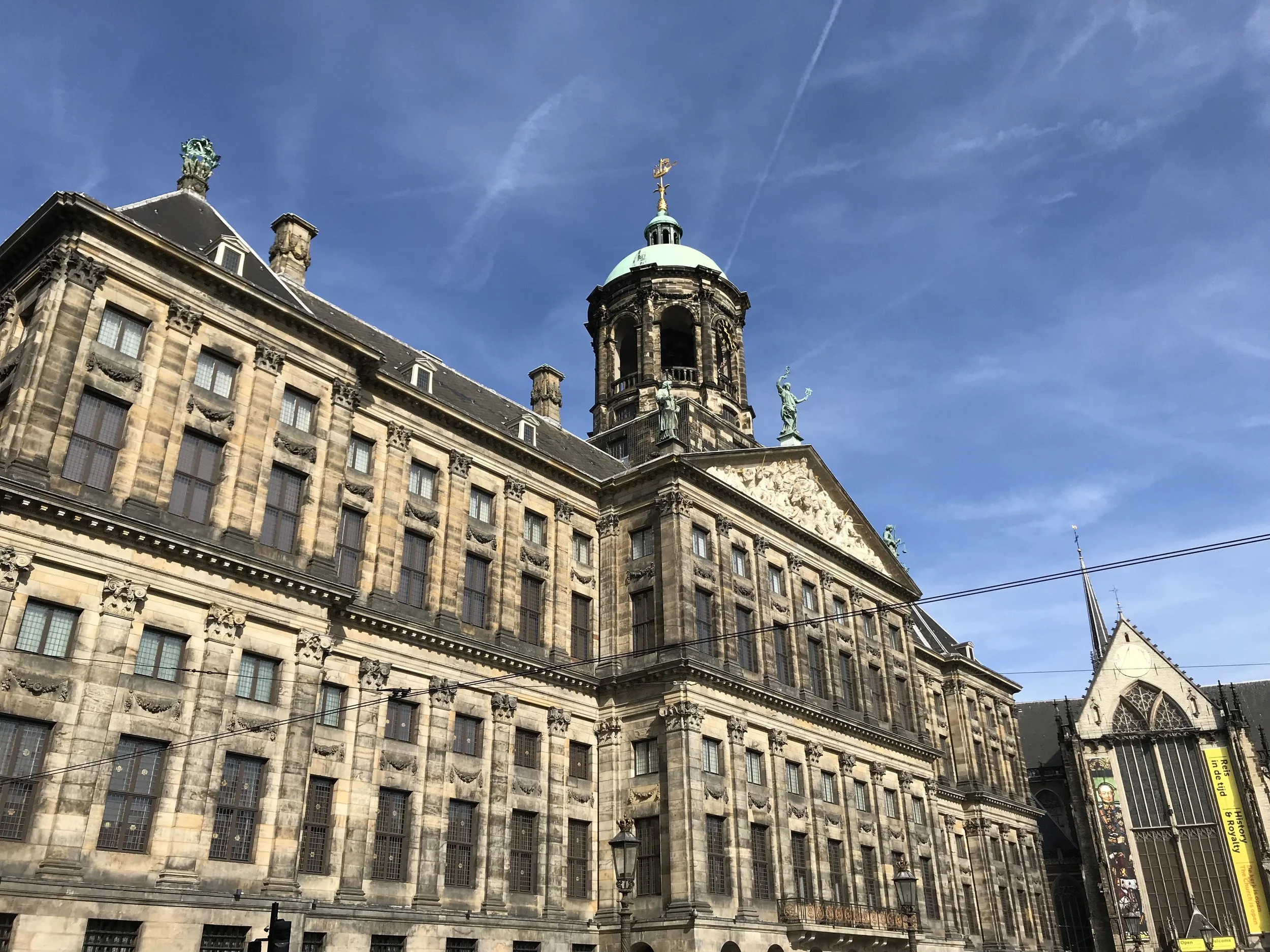
Along the way, we passed Magna Plaza, a former post office now turned shopping center, and the Royal Palace of Amsterdam (Koninklijk Paleis) on Dam Square, both grand reminders of the city’s history. Dam Square itself was busy with tourists, locals, and cyclists heading in every direction.
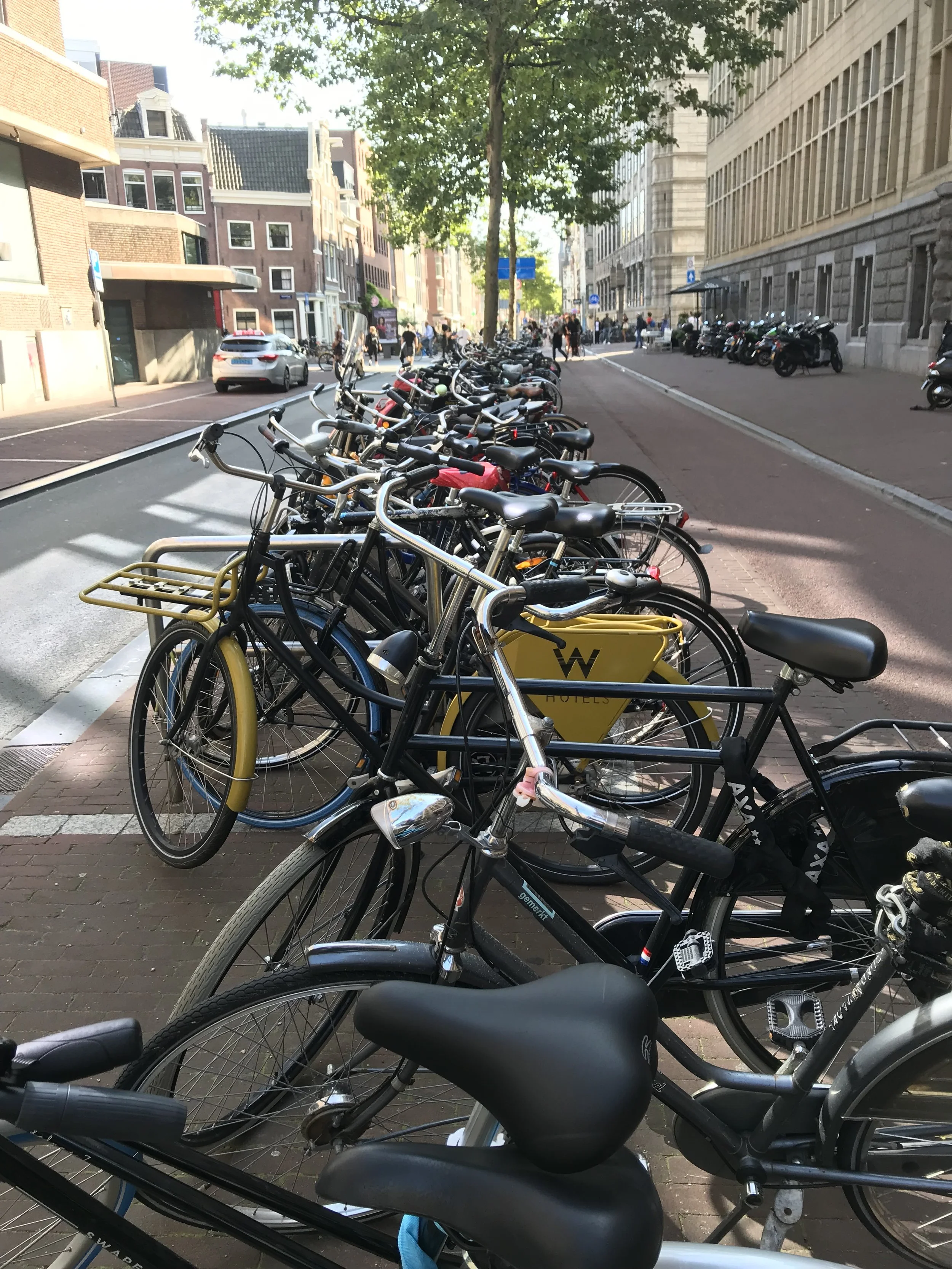
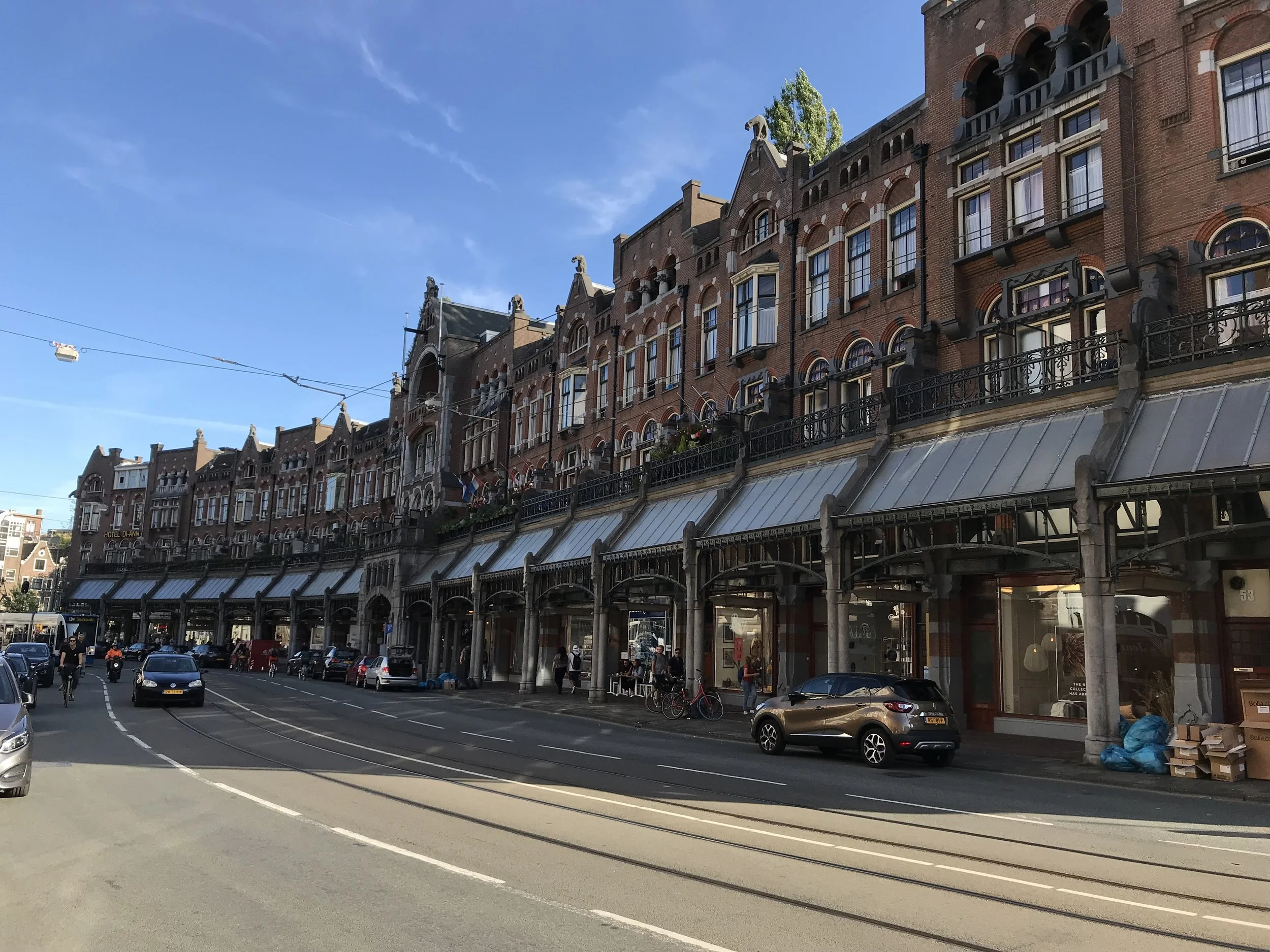
Amsterdam is a city built for movement. Bicycles outnumber cars, trams run constantly, and cafés seem to appear on every corner. I had never seen that many bikes in one place, with racks packed two levels high near Amsterdam Centraal Station, and people are very serious about bike riding. The flow of cyclists moves like traffic, and it is best to stay out of their lanes. The city also has a lot of tall people, which somehow makes navigating narrow sidewalks and doorways even more interesting. Later in the afternoon, we wandered through Leidseplein, one of the city’s busiest squares filled with outdoor terraces and shops.
Before dinner, we strolled through the Centrum District, the heart of Amsterdam filled with pedestrian streets, bakeries, cafés, and small shops. Along Nieuwendijk, we stopped at the Amsterdam Cheese Company, where the smell of aged Gouda filled the air and samples lined the counters. The surrounding streets were busy but pleasant to walk through, a mix of locals on bikes and visitors browsing storefronts that stretched toward Dam Square.
That evening, we had dinner at Bird Thai Restaurant in the area around Zeedijk Street, a narrow stretch near Nieuwmarkt that borders Amsterdam’s Chinatown and the Red Light District. It is one of the city’s oldest neighborhoods, known for its blend of cultures, where Dutch bars sit beside Asian markets and small family-run restaurants. The street has a relaxed, local feel, with bicycles leaned against old brick walls and the smell of stir-fry and baked bread drifting from open doors.
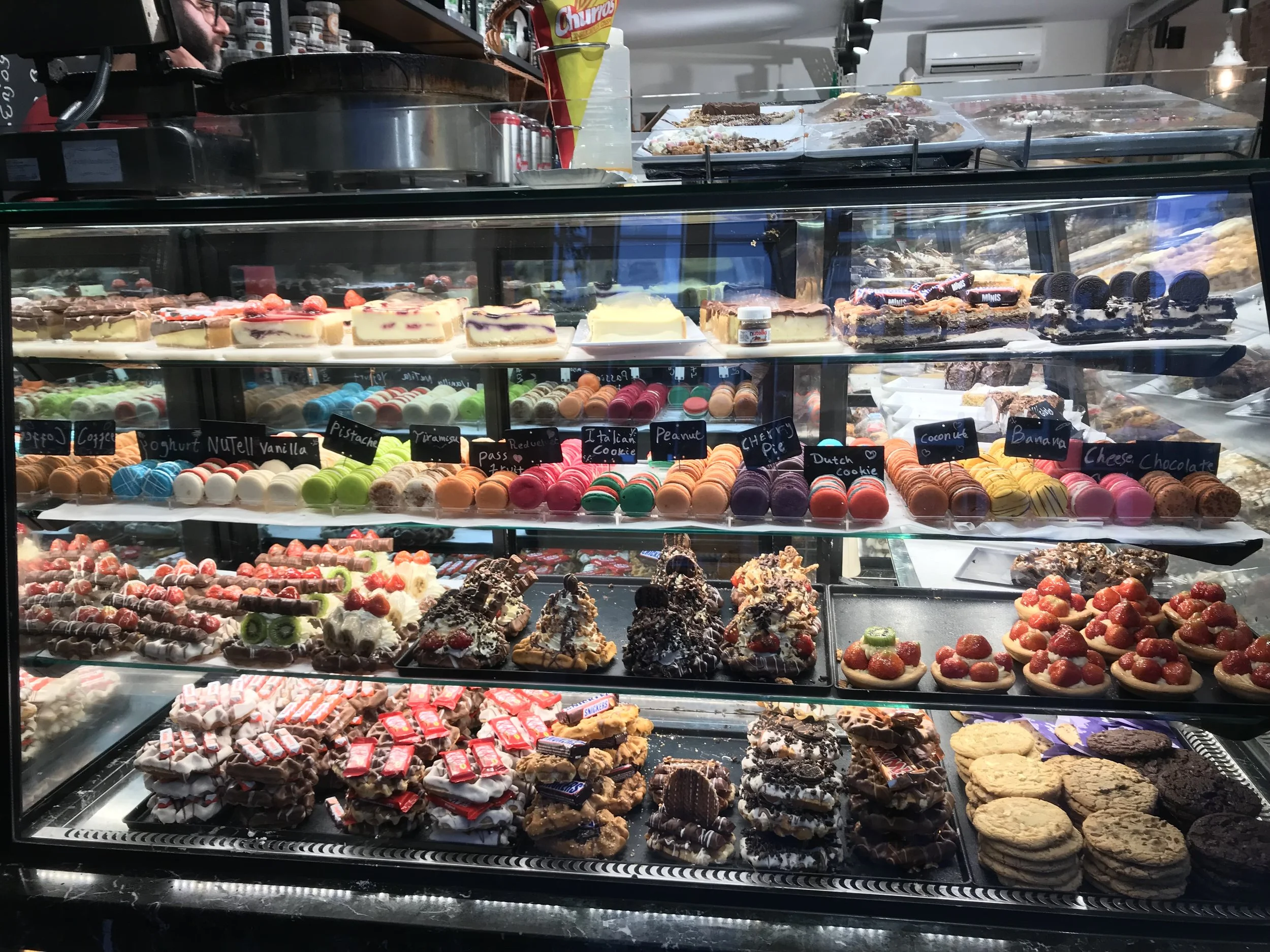
Amsterdam also stands out for its bakeries and pastry shops. From small neighborhood cafés to well-known names like Bakhuys, Vlaamsch Broodhuys, and Patisserie Holtkamp, the city takes bread and sweets seriously. Counters are filled with stroopwafels, apple tarts, croissants, and loaves baked throughout the day. What caught my attention most were the displays—rows of pastries and breads lined up behind glass, each one looking like it had just come out of the oven.
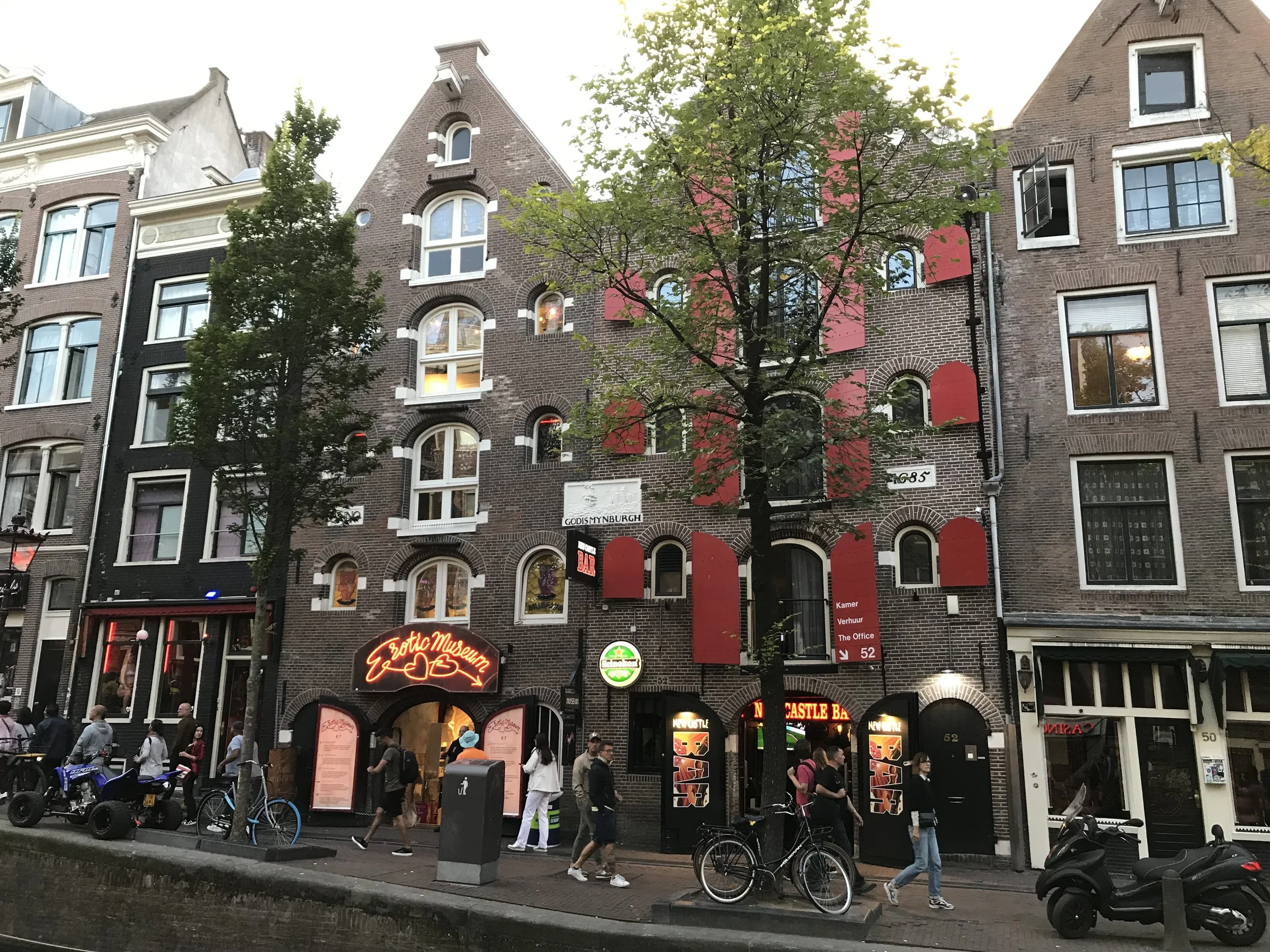
From there, it was only a short walk into the Red Light District, one of Amsterdam’s most talked-about areas. The district is famous for its red-lit windows, where licensed sex workers stand behind glass, along with its mix of bars, cafés, and coffeeshops that legally sell marijuana in small amounts. While the coffeeshops are easy to find, I did not see many people smoking in public. Most seemed to keep it indoors. The neighborhood itself is heavily regulated and among the oldest in the city, with narrow cobblestone streets and canals glowing under the lights. Photos of the women are strictly forbidden. If you try, they will close the curtain instantly and security will step in. The rope stands with gold-topped posts shaped like penises were an unexpected touch that added to the area’s reputation for being unlike anywhere else.
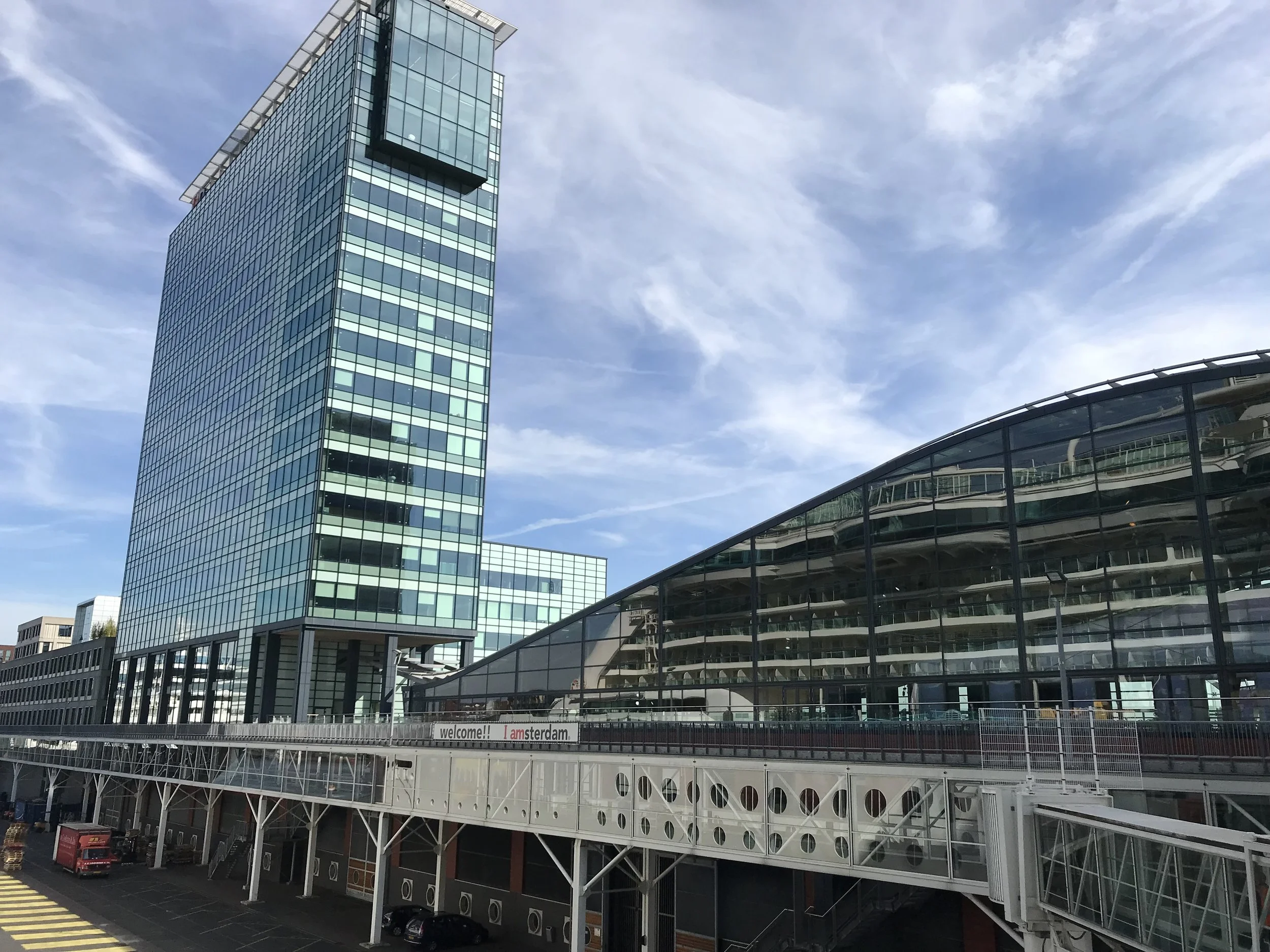
The next morning, we checked out and took a cab to the Passenger Terminal Amsterdam (PTA) on the River IJ. The terminal is modern, close to the city center, and easy to navigate. From there, we boarded our Royal Caribbean ship and began the Baltic Sea cruise that would take us to Denmark, Estonia, Russia, Finland, and Sweden. Watching the city shrink in the distance from the ship felt like the perfect end to a short but memorable stay.
Getting Around
Amsterdam’s public transportation is reliable and easy to use. The GVB trams cover most of the city, and one-day or multi-day passes can be purchased at stops or stations. Prices range from about €9 for 24 hours to €24 for 72 hours. The Metro connects the center with outlying neighborhoods and the airport.
You can also rent bikes throughout the city, especially near the train station and major squares. Rentals average €10 to €15 per day, a great way to cover more ground if you are comfortable sharing the lanes with locals. Many areas, like the Canal District and Dam Square, are best explored on foot.
A casual café meal usually costs €10 to €15, while mid-range restaurants average €20 to €30 per person. Admission to most major museums such as the Van Gogh Museum and Rijksmuseum runs about €20 each, while a one-hour canal cruise averages €18 to €25. Entry to the Anne Frank House costs around €16 for adults and must be reserved online in advance.
Costs and Budget
Amsterdam can be moderately expensive, especially near the city center. A typical hotel room in the central area ranges between €150 and €250 per night, depending on the season. Local cafés and bakeries are reasonably priced, and street food like fries or stroopwafels usually costs €3 to €6.
Admission prices vary depending on what you visit. Expect to pay around €20 for major museums, €16 for the Anne Frank House, €15 for the Heineken Experience, and about €25 for a Hop-On Hop-Off canal tour. Many public squares, parks, and attractions like Dam Square and Vondelpark are free to visit.
Taxis start around €4 with an additional €2 per kilometer, but most visitors find trams or walking the better value.
For budgeting purposes, plan to spend roughly €100 to €150 per day including meals, transportation, and attractions, though this can vary based on where you stay and how you dine.
Other Things to Do
If you have more time, spend a few hours in Museumplein, home to Amsterdam’s most famous museums. The Rijksmuseum displays Dutch Golden Age masterpieces such as Rembrandt’s The Night Watch and Vermeer’s The Milkmaid. Next door, the Van Gogh Museum houses the world’s largest collection of his work, including Sunflowers and The Bedroom.
Take a canal cruise to see Amsterdam from the water. Most leave from near Centraal Station and last about an hour. The Vondelpark, Amsterdam’s largest green space, is ideal for walking, picnicking, or simply watching cyclists glide past. The Heineken Experience, inside the brewery’s original building, combines exhibits, tastings, and rooftop views.
For a more local experience, visit the Albert Cuyp Market in De Pijp for produce, fish, and traditional stroopwafels, or explore the Bloemenmarkt, the city’s floating flower market where tulips are sold year-round.
Currency
The local currency is the Euro (EUR). Credit cards are widely accepted, though small cafés and markets often prefer cash. ATMs are plentiful throughout the city center.
When to Visit
Amsterdam’s peak season runs from April through September, when daylight stretches late into the evening and the canals shimmer in the sun. Summer is the warmest and usually busiest period, but during our visit in August 2019, it never felt overcrowded. The streets were lively yet manageable, and most attractions were easy to move through without long waits. Spring brings tulip season, while autumn tends to be quieter and cooler.

Looking Back
Since that visit, Amsterdam has started to change in noticeable ways. One of the biggest involves its relationship with cruise tourism. City officials have approved plans to limit large cruise ships docking in the city center, with the number of visits being reduced and long-term plans to relocate operations farther from the old harbor. When we were there, the cruise terminal sat right in town, just a short cab ride from Dam Square. In the future, departures may happen farther away.
The city’s approach to cannabis is also evolving. When we visited, coffeeshops were an everyday part of Amsterdam’s culture. Today, the Dutch government is testing a new system to create a fully regulated cannabis supply chain, tightening rules around sourcing and sales. The tolerant, casual atmosphere remains, but visitors may notice more oversight and clearer boundaries than in years past.
Amsterdam continues to balance openness with preservation. It feels both progressive and deeply historic, still beautiful, still in motion, and always adapting.