Paris France
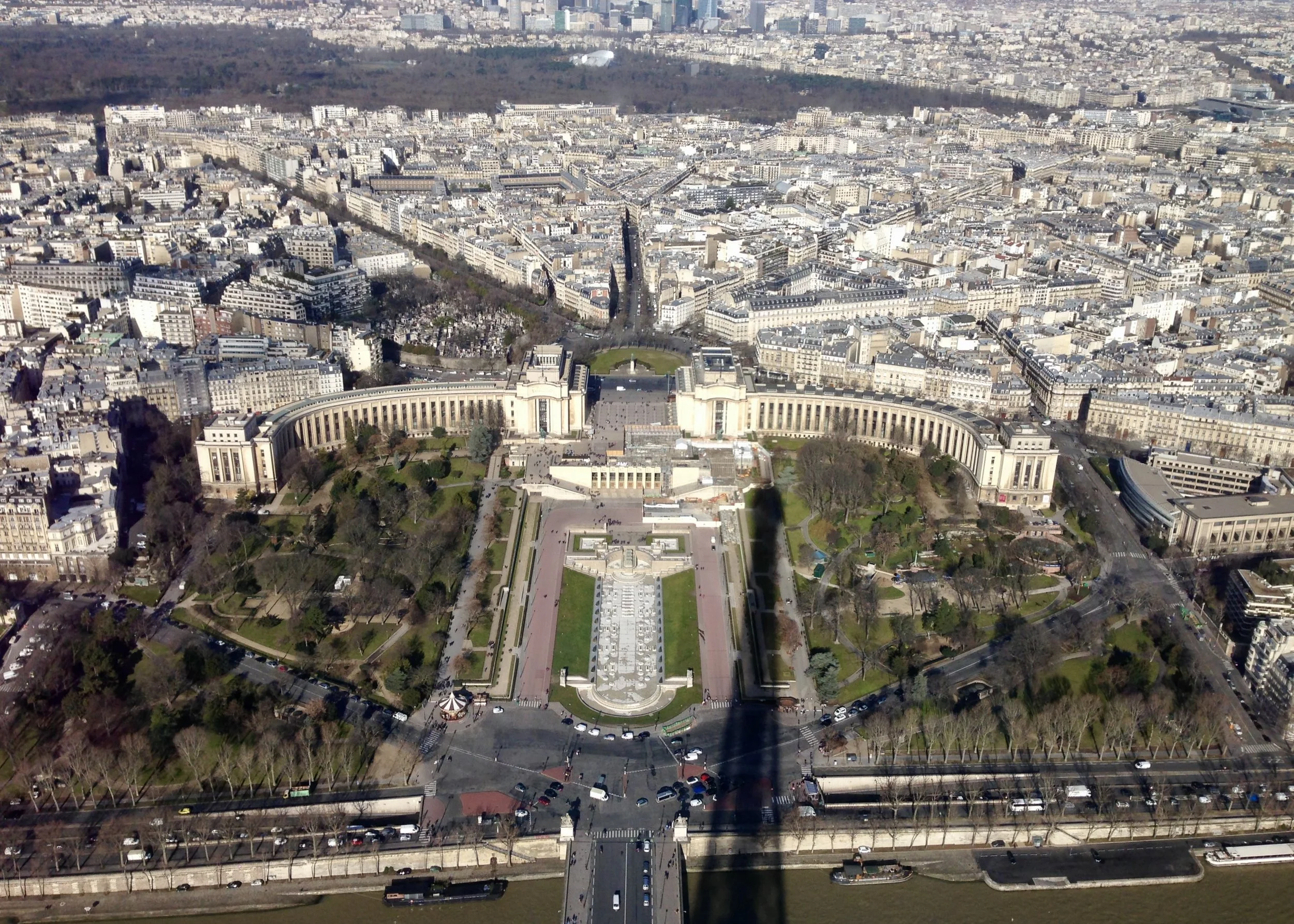
View from the Eiffel Tower
We arrived in Paris by train. Once in the city, we transferred from the Eurostar to the local train system and rode to the Glacière Station before walking to our hotel. We stayed at the Paris Marriott Rive Gauche Hotel & Conference Center, a comfortable base on the Left Bank with easy access to the Metro and nearby cafés. It’s located not far from the Catacombs, which we didn’t visit.
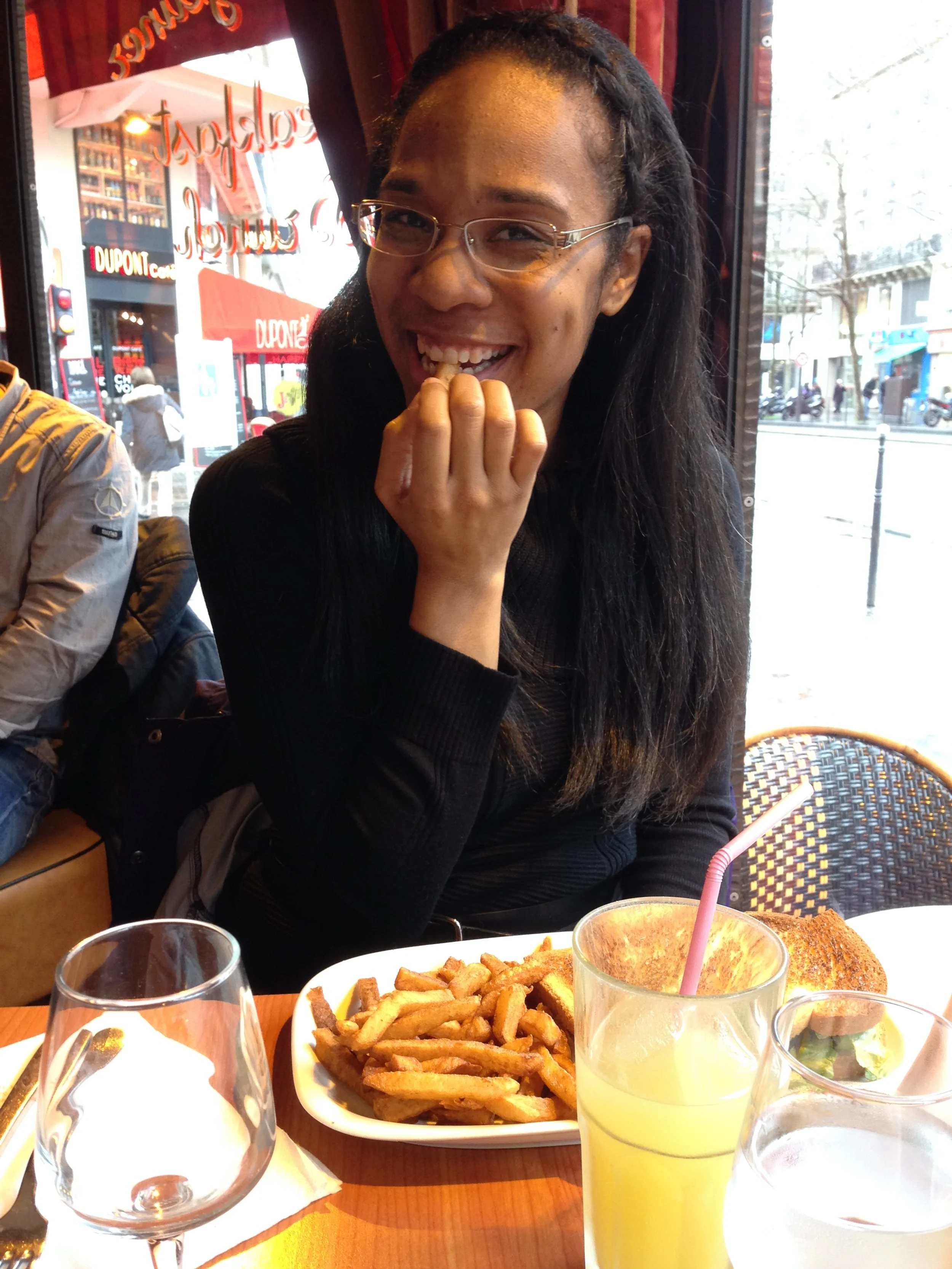
Once we settled in, we headed out to see what Paris had to offer. First stop: food. We took the train from the hotel to the Bir-Hakeim Station on Line 6, a short walk from the Eiffel Tower, and found a small restaurant nearby. After eating, we walked toward the tower. The streets around it were lively, lined with cafés, souvenir stands, and vendors selling crêpes and roasted chestnuts. The Champ de Mars stretched out in front, a long open park where people were taking photos or sitting on benches facing the tower. Across the river, the Trocadéro offered another clear view, with fountains and wide steps leading down toward the Seine. A small merry-go-round turned near the base, and boats for the evening river tours drifted slowly below.
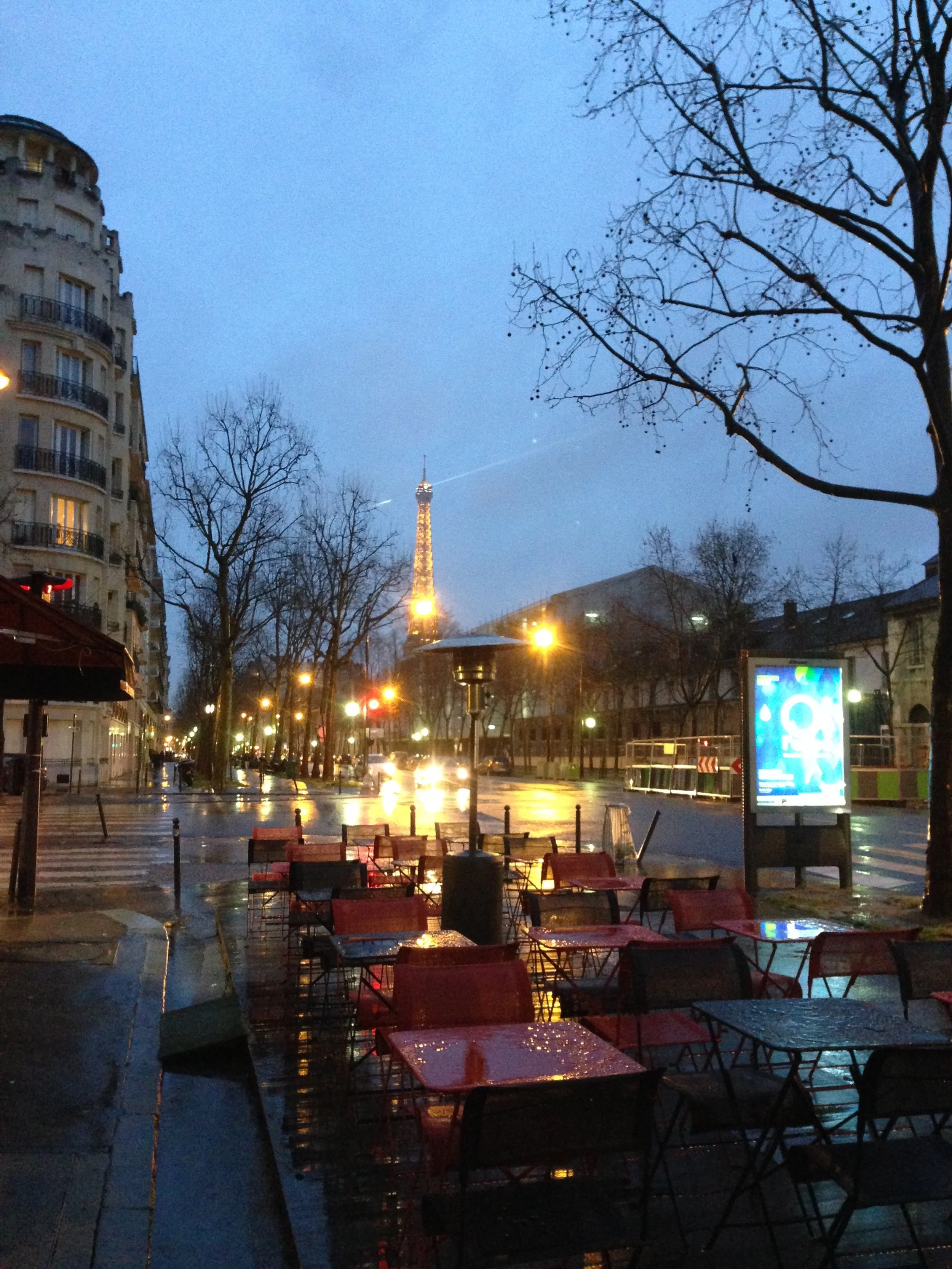
We didn’t go up the tower that night but spent some time walking through the area before my friend started to get tired. We headed back toward the train station. Like in any large city, there were people sleeping in corners and others simply trying to stay warm. It’s the part of Paris most guides and photos leave out. By the time we returned to the hotel, the sky had turned gray and a light drizzle had started. While my friend rested, I went back out to walk. Rain has a way of quieting a place, and as the light reflected off the damp cobblestones, I understood why people like Paris.
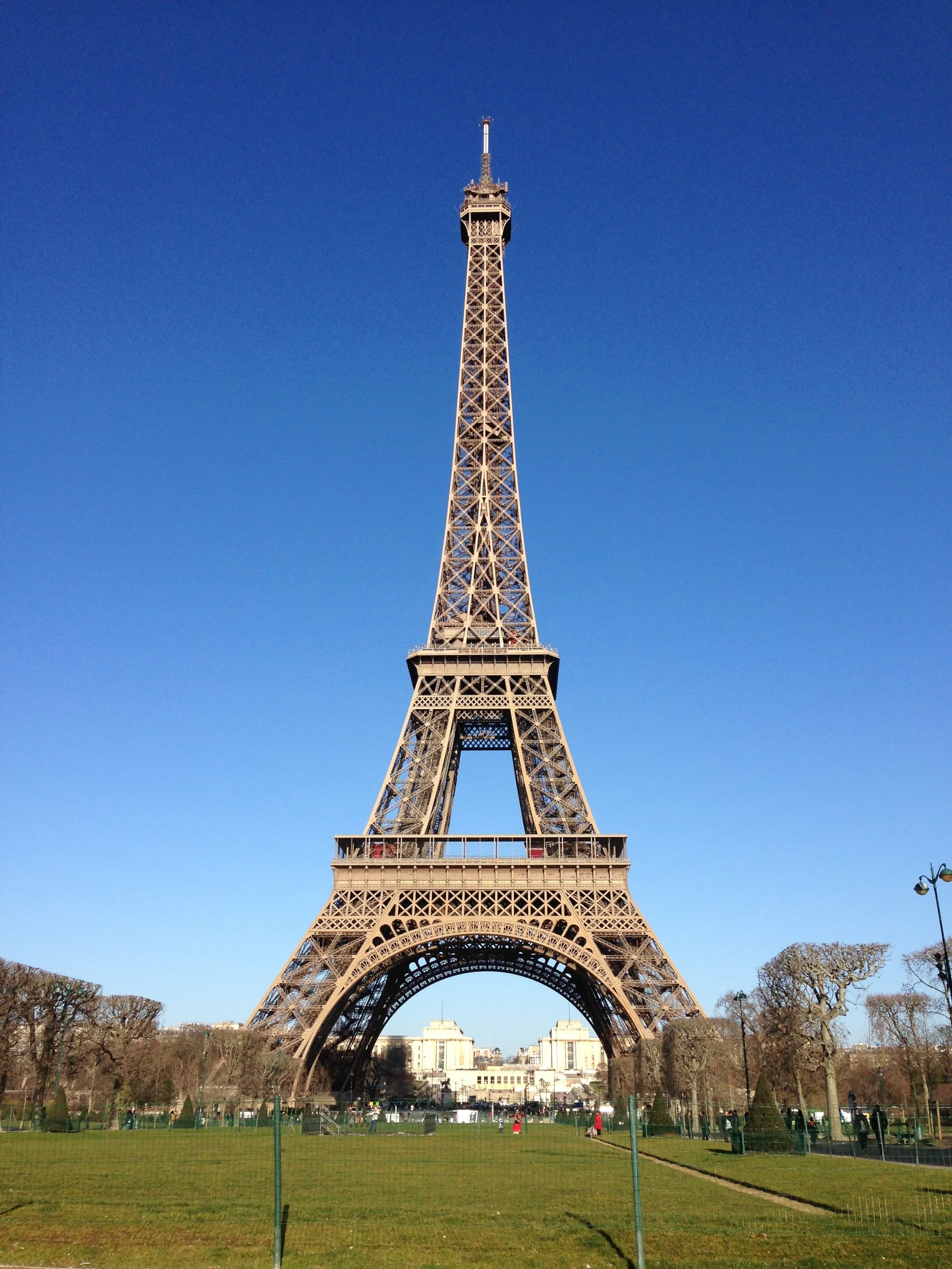
Day Two: The Eiffel Tower, Arc de Triomphe, and Beyond
The next morning, we returned to the Eiffel Tower. I had accidentally bought a ticket for the wrong day and had to purchase another, since the first couldn’t be refunded. February was less crowded than summer, but it was still busy. After a brief security check, we entered the main courtyard beneath the tower, where small souvenir stands and cafés surrounded the base. Visitors can either climb the stairs or take the elevator to the upper levels. We chose the small elevator, which stopped at each platform before continuing to the top.
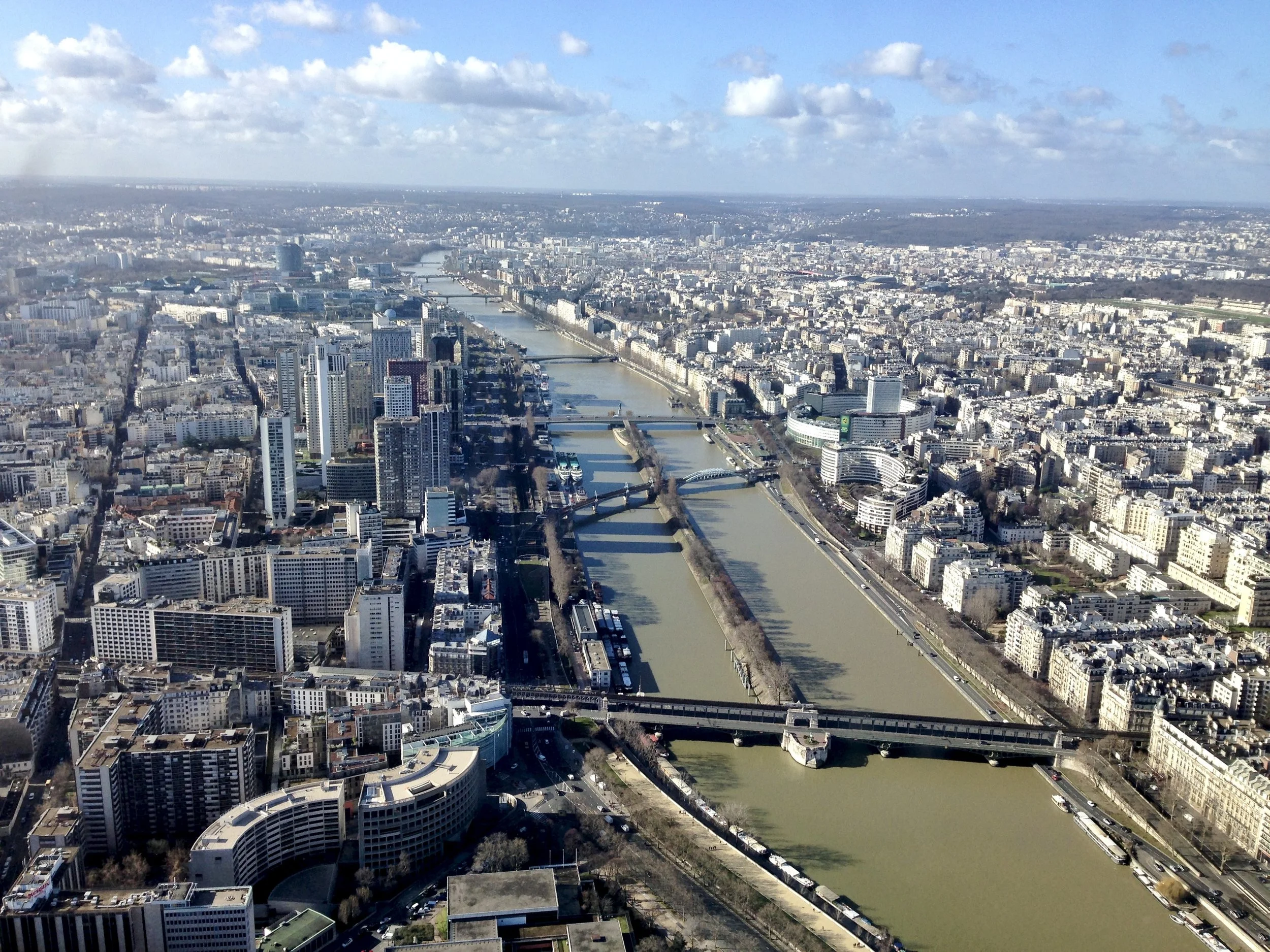
Each level offered a different view of Paris. The first included a café and displays about the tower’s construction. The second gave a wider view of the city, and from there another elevator continued to the summit. From the top, the Trocadéro Gardens and Palais de Chaillot stretched out across the river, perfectly aligned with the Champ de Mars below. The tower’s shadow crossed the Seine, and beyond that the rooftops of Paris seemed to go on forever. In the distance, the modern glass buildings of La Défense stood out from the older parts of the city.
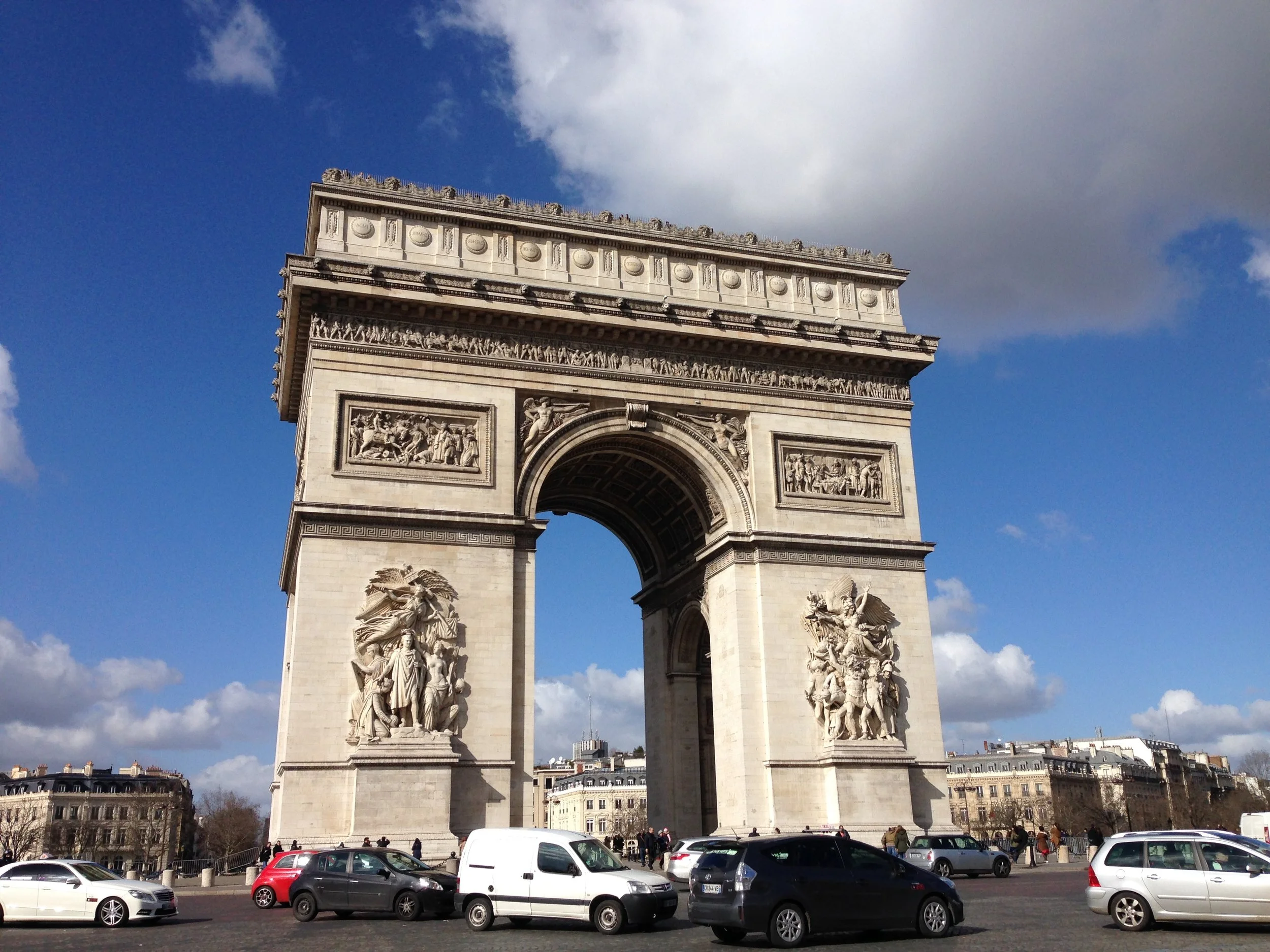
Arc de Triomphe
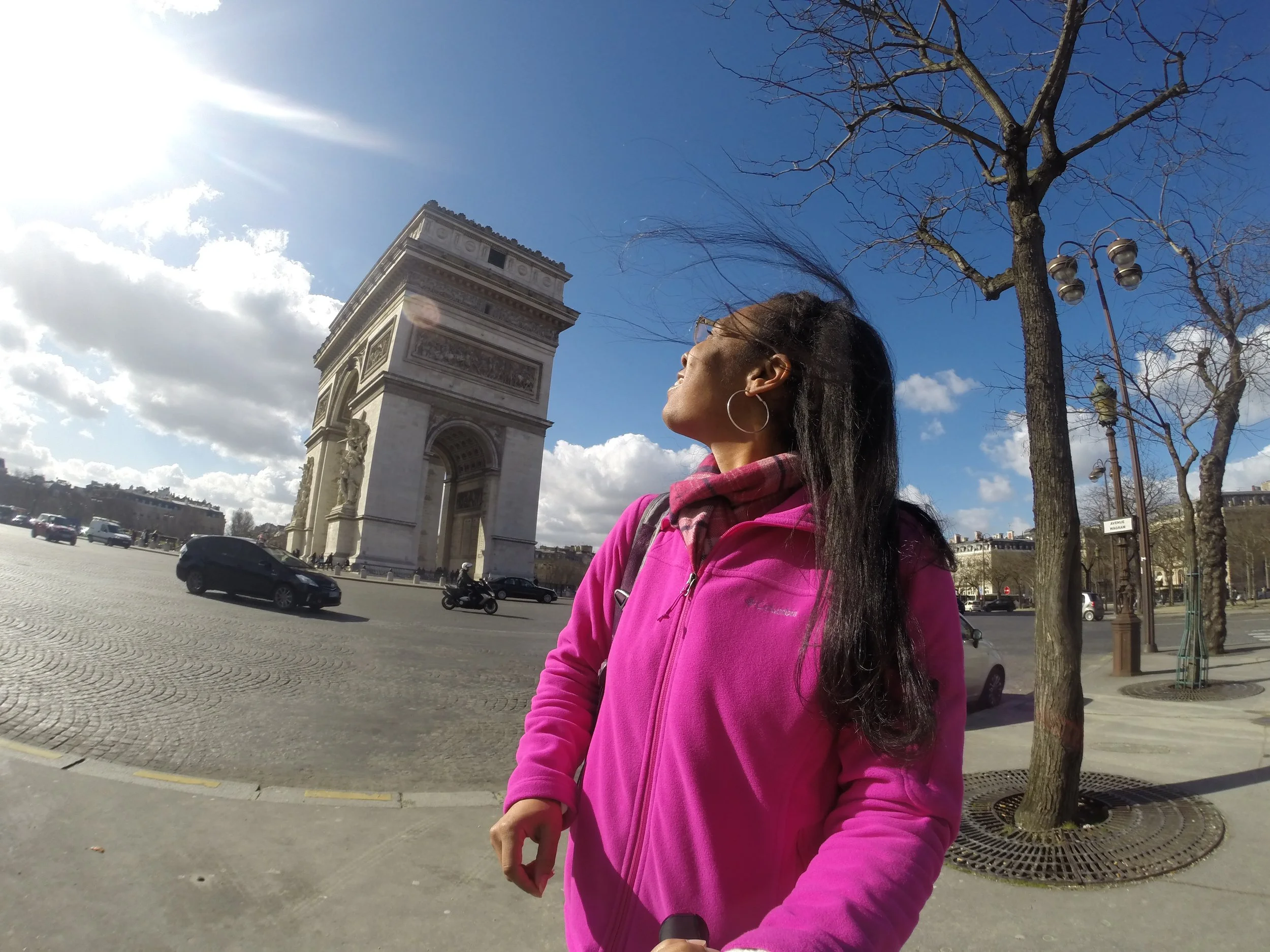
After leaving the tower, we made our way to the Arc de Triomphe. The traffic circle surrounding it was constant, with cars moving in every direction. Up close, the monument was large and covered in detailed carvings and the names of battles etched into the stone. We crossed the underpass to reach the base of the arch before making our way down the Champs-Élysées, one of the city’s most recognizable avenues. The wide sidewalks were lined with cafés, luxury stores, and souvenir shops, with people filling every direction. We stopped briefly along the way before continuing toward the river.
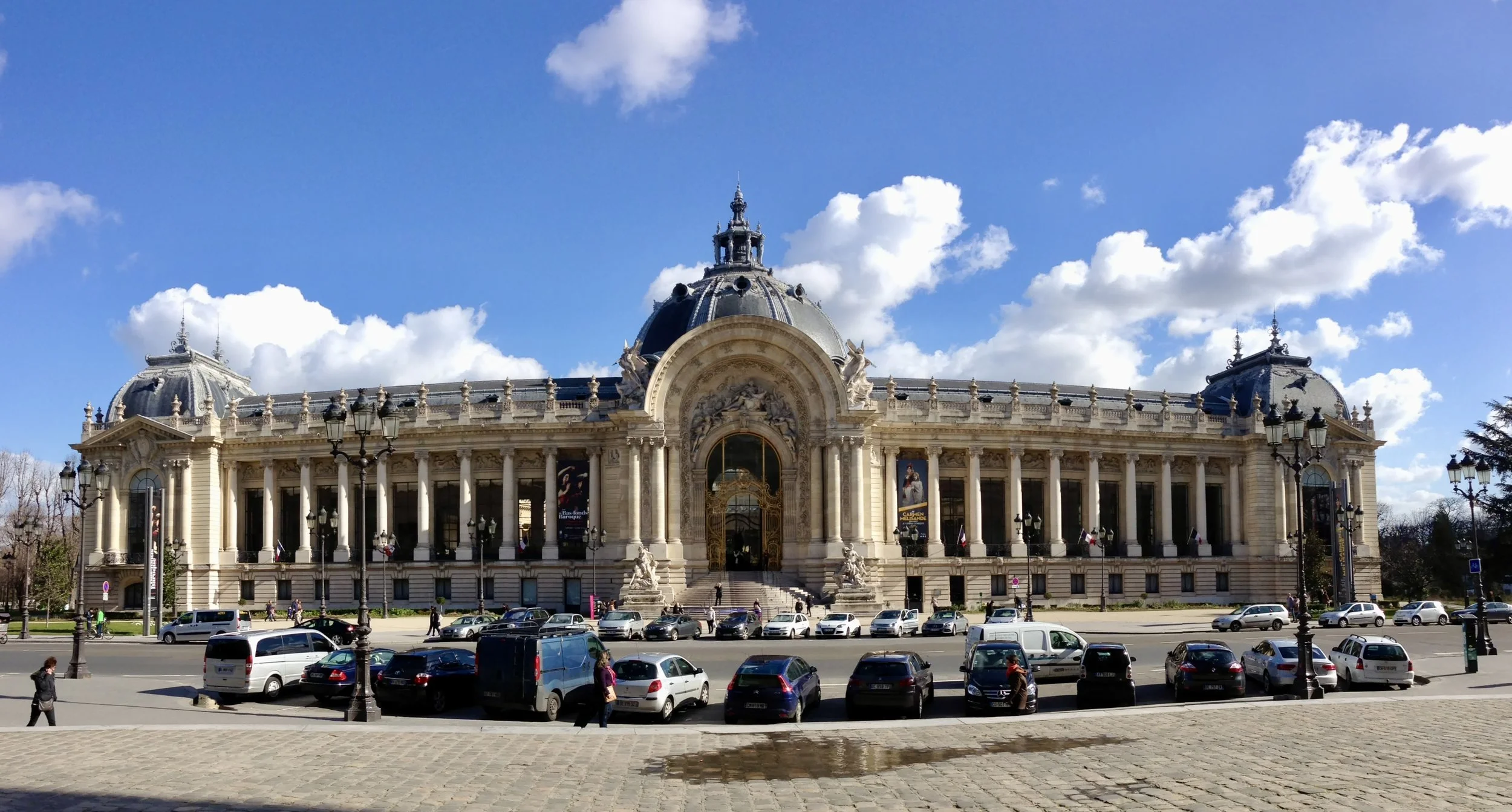
Grand Palais
Crossing the Pont Alexandre III bridge gave a clear view of the Eiffel Tower in the distance. The bridge itself stood out for its black iron lamps and gold statues. On the opposite bank, the Grand Palais and Petit Palais faced each other, both built with long rows of columns and decorative façades. We continued on to Les Invalides, identifiable by its gold dome and symmetrical layout. Inside the main courtyard, Dôme des Invalides held Napoleon’s tomb beneath an arched ceiling and marble walls. The site was quiet and well-kept, with a clear line of sight through the open courtyard toward the city beyond.
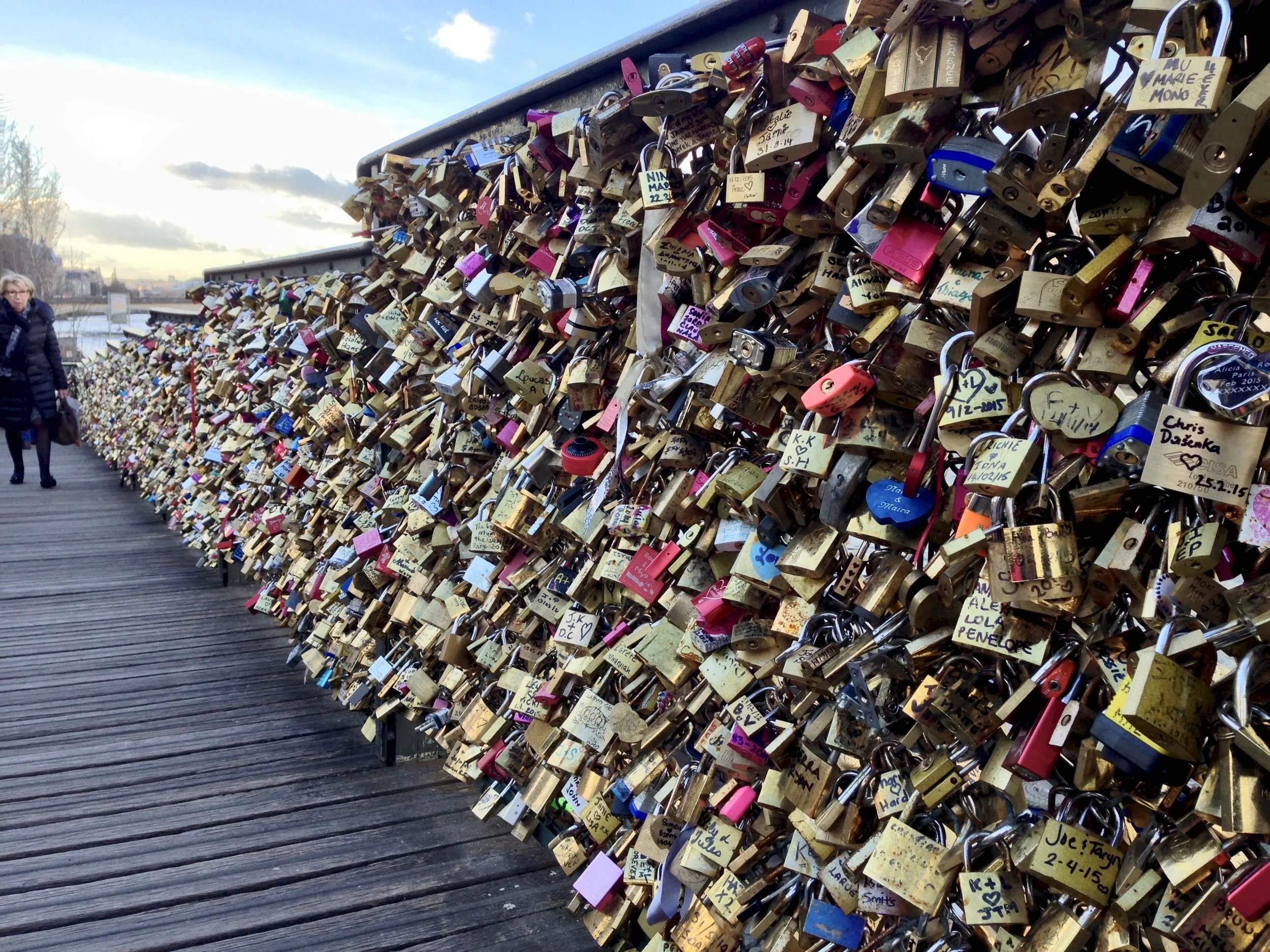
The Love Locks
From there, we walked to the Pont des Arts, which at the time was still covered in love locks. The railings were filled from end to end, with thousands of small padlocks attached. A few vendors nearby sold them, and people continued adding more despite the city’s efforts to discourage it. We ended the day at Notre-Dame Cathedral, where both towers were still open to visitors. The front façade showed detailed stonework and figures carved into the entryways. Inside, the stained-glass windows filtered the sunlight and illuminated the interior. After leaving, we took the train back to our hotel.
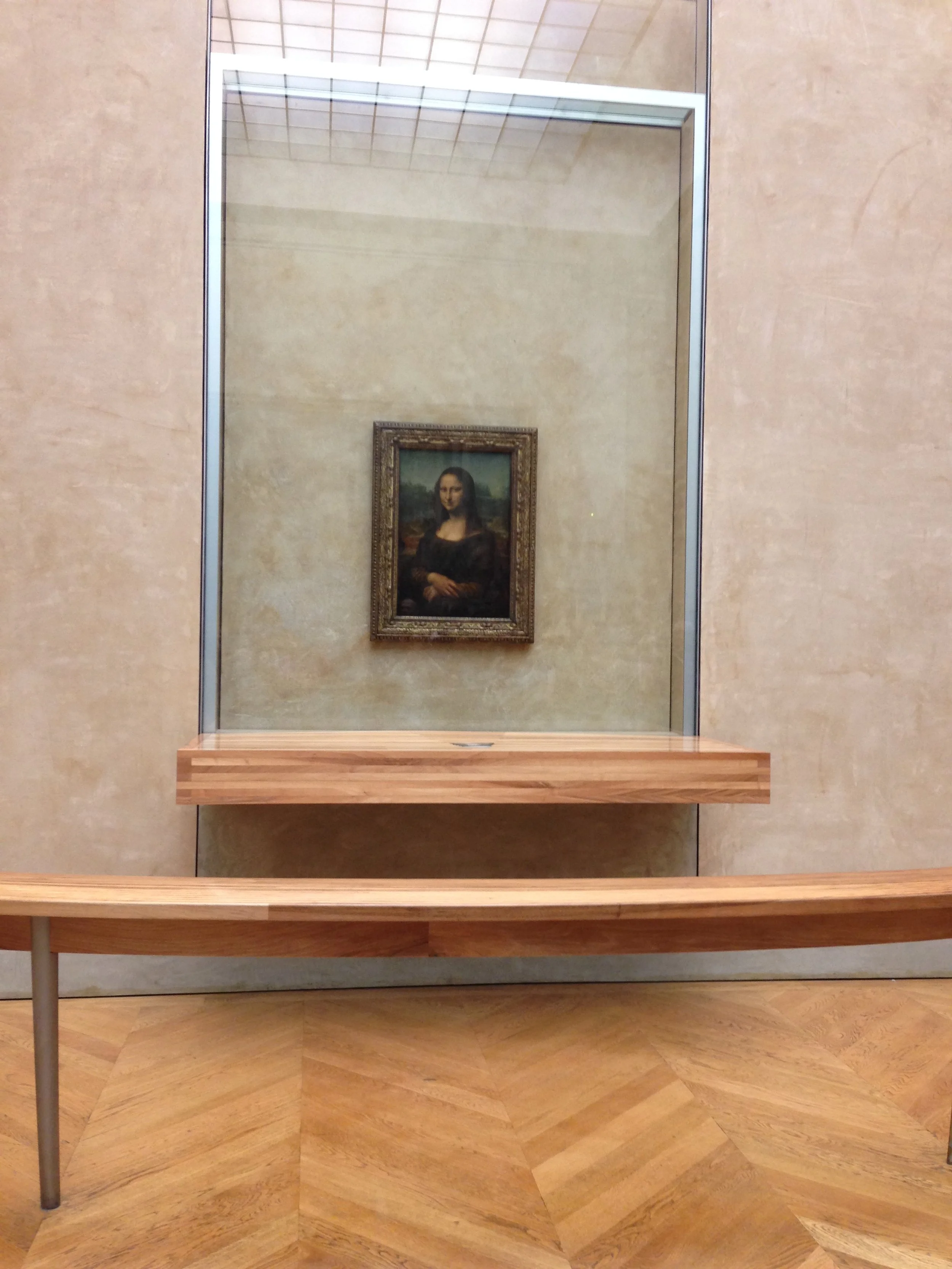
The Mona Lisa and all her layers of protection.
Day Three: The Louvre, Montmartre, and the Luxembourg Gardens
We started the next day at the Louvre. We went inside and saw several of its well-known pieces, including the Mona Lisa, before leaving earlier than planned. The museum itself was enormous, with long corridors, vaulted ceilings, and artwork from nearly every period. After a few hours, we decided to move on and see more of the city.
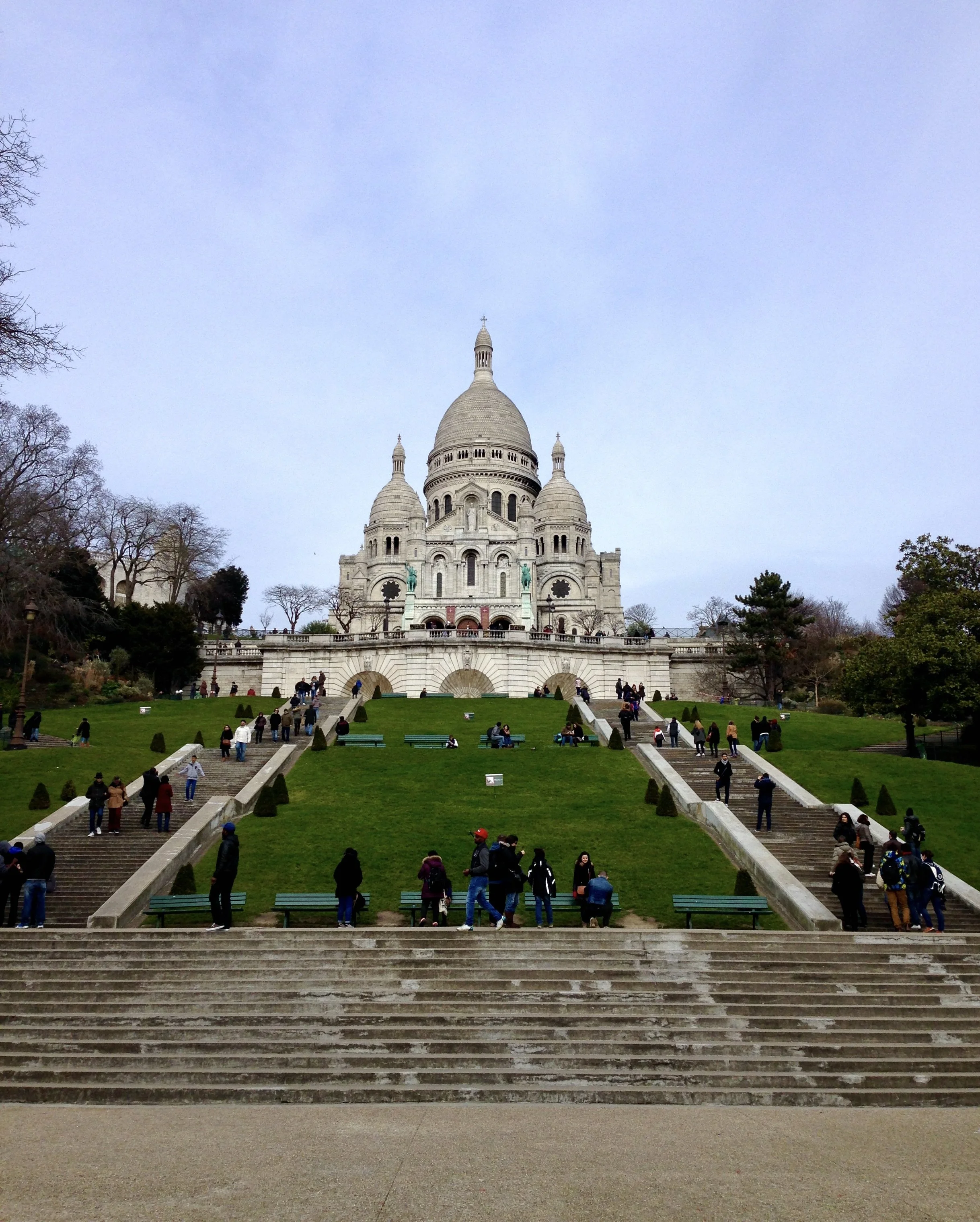
Sacré-Cœur
From there, we took the train toward Montmartre and Sacré-Cœur. The walk uphill was long and steep, but the neighborhood had its own character. Artists set up easels along the cobblestone streets, musicians played near the steps, and cafés spilled out onto the sidewalks. Near the base of the hill, a group of men aggressively tried to sell bracelets to passing tourists, grabbing at wrists or holding out string to get attention. It was common in that area, especially near the base of the steps leading to the basilica. The view from the terrace of Sacré-Cœur stretched across the city, hazy but wide enough to see many of the landmarks we had visited the day before.
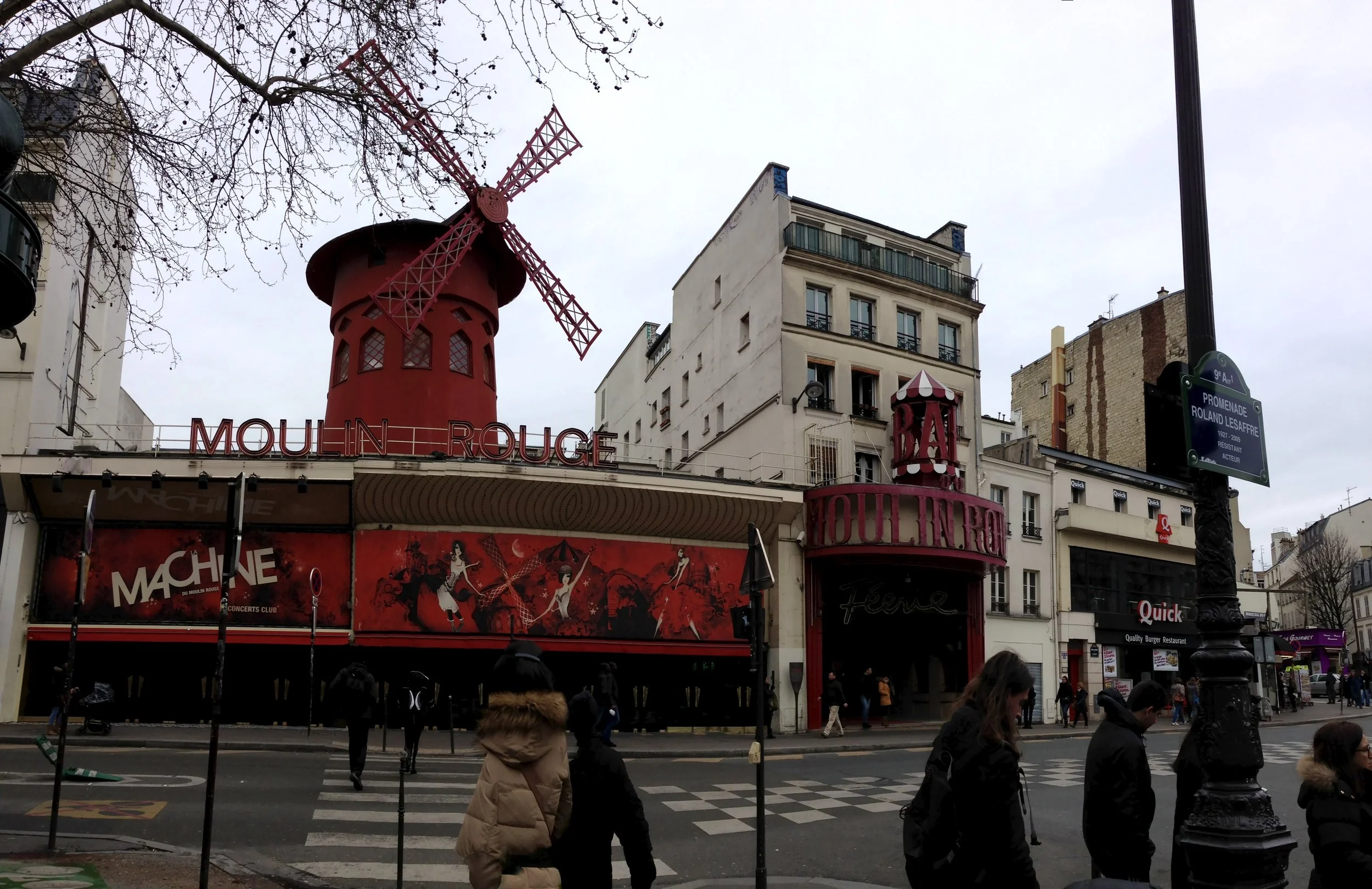
Moulin Rouge
From there, we walked through the Pigalle district, home to the Moulin Rouge. The red windmill above the cabaret was instantly recognizable, and the surrounding streets were lined with small bars, shops, and bright neon signs. Most of them were closed since we were there earlier in the day, but even then, the area still carried the energy it’s known for. It’s one of those parts of Paris that feels slightly theatrical, touristy but still true to itself.
Afterward, we headed back toward the hotel and decided to walk around the area. We passed the entrance to the Catacombs of Paris but chose not to go inside since the line stretched down the block. Continuing on foot, we came across Saint-Sulpice Church, one of the city’s largest churches, with twin towers and a wide stone courtyard out front.
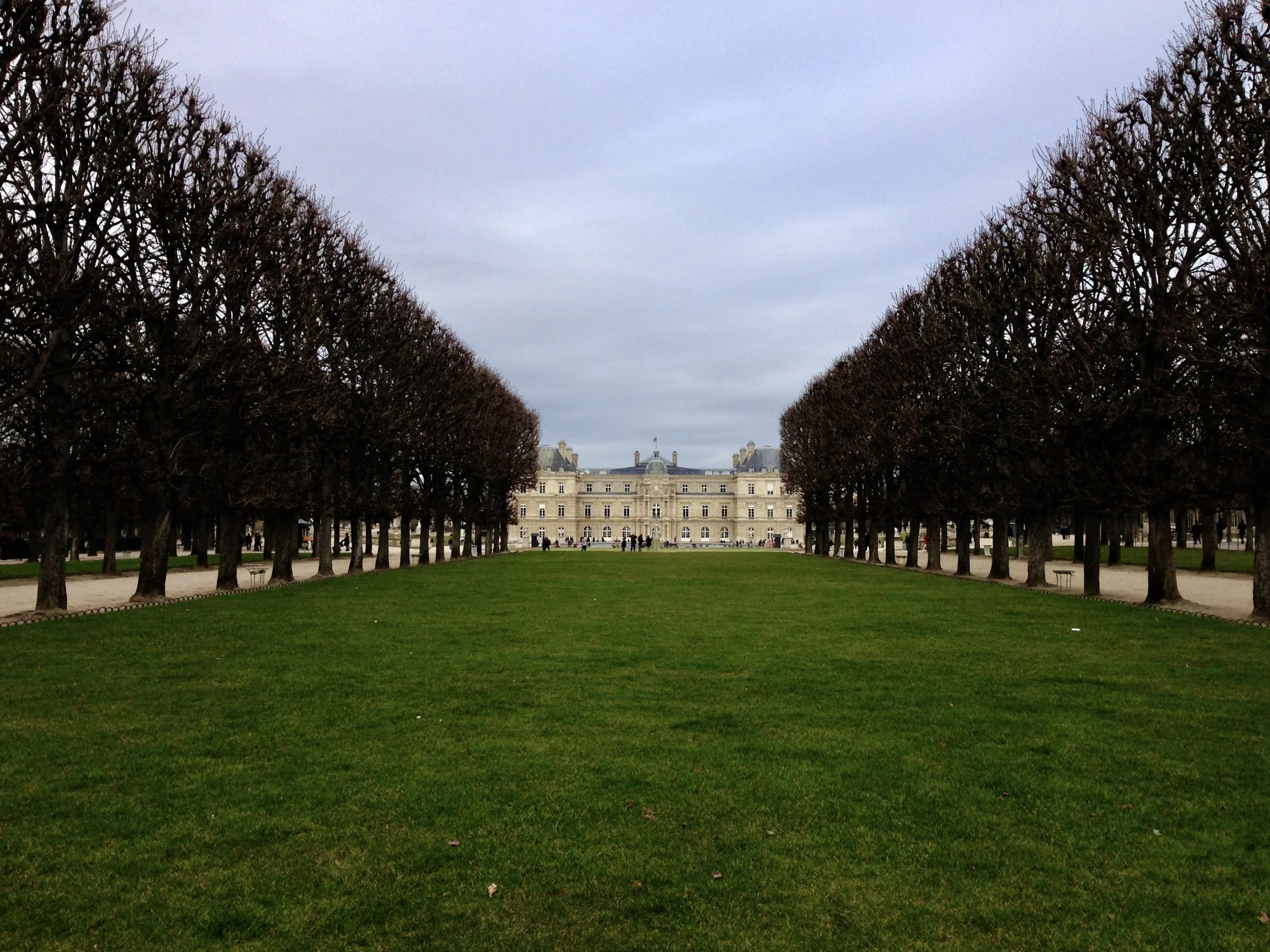
Luxembourg Gardens and Luxembourg Palace
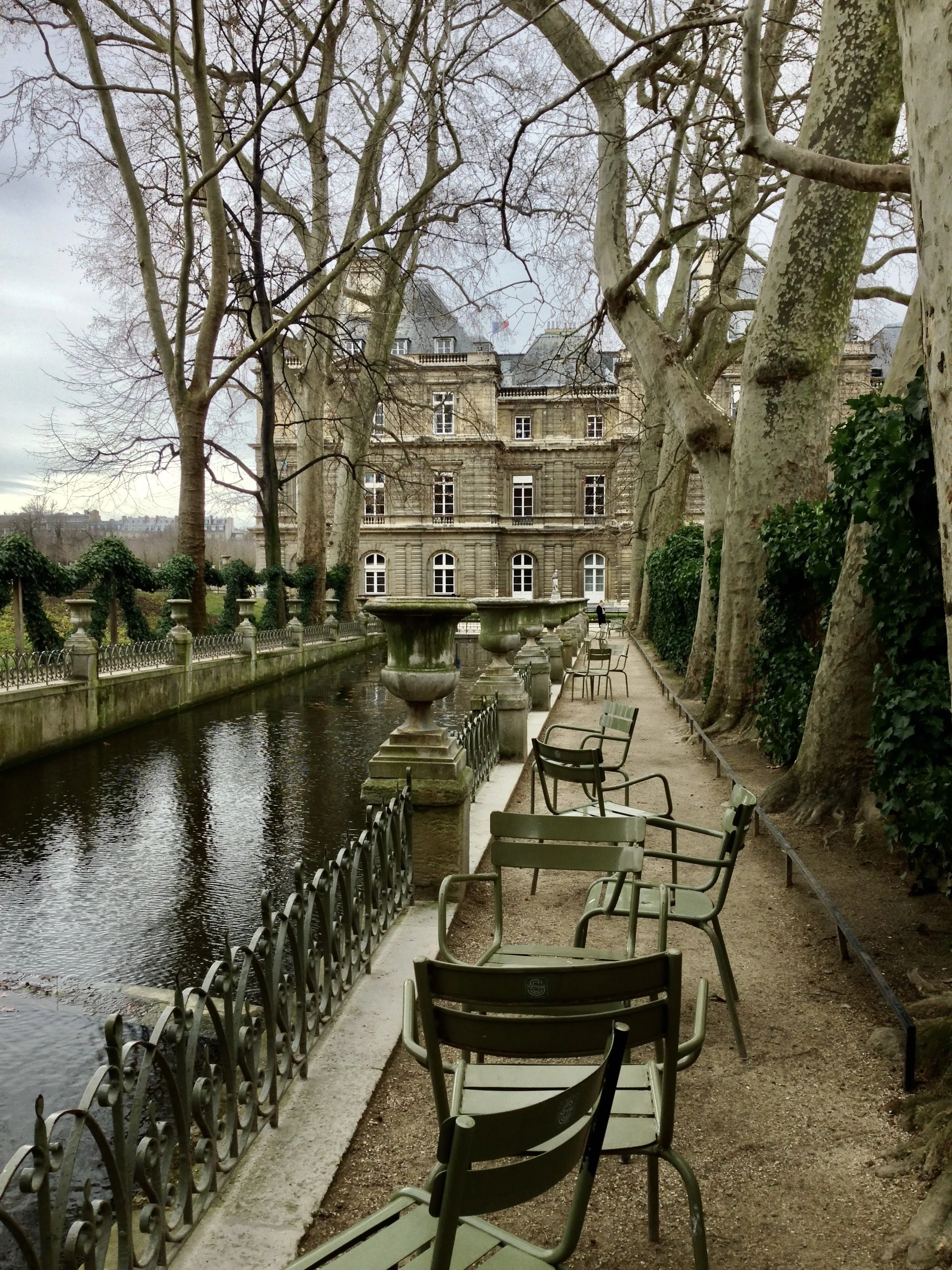
A few blocks away, we reached the Luxembourg Gardens, which surrounded the Luxembourg Palace. The paths were wide and clean, with locals sitting on benches and children sailing small boats in the pond. Even in late winter, the gardens were well-kept. We stopped at the Medici Fountain, tucked beneath tall trees and covered in moss, its sculptures of mythological figures framed by still water that reflected the gray sky above. It was a quieter end to a busy few days, and by the time we returned to the hotel that evening, the trip felt complete.
The next morning, we headed to the airport for our flight back to Dublin.
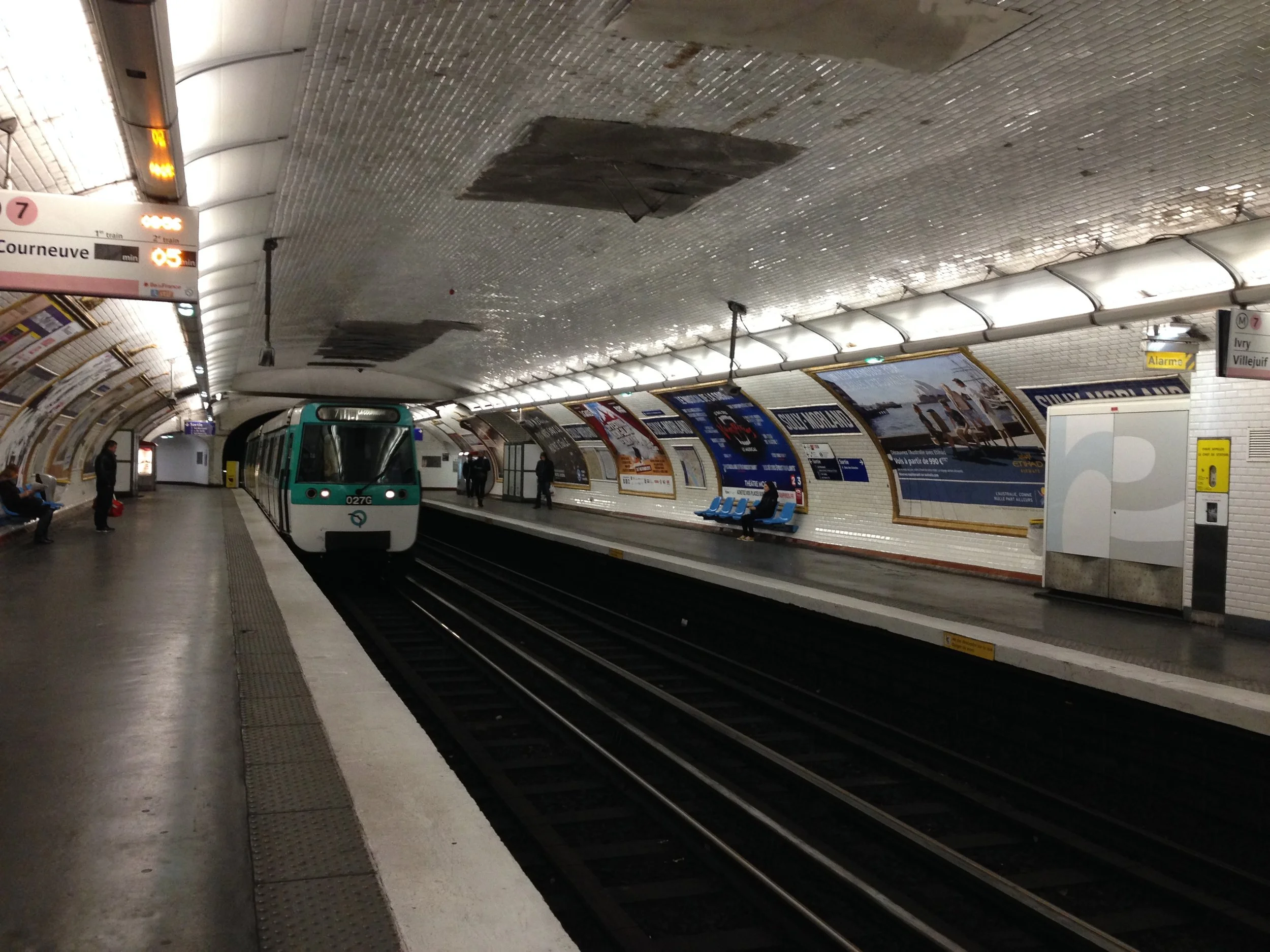
The Metro
Getting Around
Paris offers several ways to move around, depending on how much time and flexibility you want. The Metro is the fastest and most efficient option for most routes, with fourteen lines that reach nearly every major attraction. Stations are well marked, and trains run frequently from early morning until just after midnight. We used the Metro regularly, starting from the Glacière Station near our hotel and taking Line 6 to reach Bir-Hakeim for the Eiffel Tower. The RER commuter trains cover longer distances and connect to airports, Versailles, and neighborhoods beyond the city center. The Metro and RER systems connect easily at major stations, making transfers between local and regional trains straightforward.
For shorter trips, buses provide a slower but scenic way to travel above ground, and stops are clearly labeled. Taxis and rideshares like Uber are widely available, though traffic can be heavy during peak hours. Bicycles are another good option, especially through the Vélib’ Métropole bike-share program, which has docking stations all over the city. Walking is often the most practical choice in central Paris, where many landmarks are within easy distance of one another along the river.
Those arriving or departing by air can use the RER B line to reach Charles de Gaulle Airport or Orly Airport, both of which also offer shuttle buses and private transfer services. For anyone planning to rely on public transport, the Navigo Easy card makes paying for rides simple and works across Metro, RER, buses, and trams.
Other Things to Do
There is more to see in Paris than most visitors can fit into one trip. Beyond the Louvre, museums like the Musée d’Orsay and the Musée de l’Orangerie hold collections that are as impressive as they are manageable. The Orsay, housed in a former train station, focuses on Impressionist works by Monet, Renoir, and Van Gogh, while the Orangerie displays Monet’s Water Lilies in full scale. For modern and contemporary art, the Centre Pompidou stands out with its exposed structure and colorful design.
If you want to get outside the museum circuit, Versailles is an easy day trip from Paris and can be reached by the RER C line. Closer to the city center, open-air markets such as Marché Bastille and Marché d’Aligre offer fresh produce, cheeses, and baked goods. Parks like the Jardin des Tuileries and Jardin du Luxembourg are perfect for walking or simply sitting to take a break from sightseeing.
Those who enjoy exploring neighborhoods can visit Le Marais, known for its boutiques, bakeries, and narrow streets, or Saint-Germain-des-Prés, where cafés and bookshops line the sidewalks. For travelers interested in architecture, Opéra Garnier and Sainte-Chapelle are both worth the visit. Even with several days in the city, it’s hard to see it all, which is part of what keeps people returning to Paris. If I return, Versailles and the Orangerie would be at the top of my list.
Looking Back
Visiting Paris in 2015 meant seeing several landmarks before they changed. Notre-Dame Cathedral was still fully open, its towers and spire untouched by the 2019 fire that later caused years of restoration work. The Pont des Arts bridge was still covered with the love locks, that have since been removed for safety reasons. Around the Eiffel Tower, security was minimal at the time, and visitors could walk freely beneath the structure without going through the gated entry area that exists today.
In the years since, Paris has made visible changes to manage tourism and improve access. The restoration of Notre-Dame is nearing completion, and crowd flow around major sites like the Eiffel Tower and Versailles is better organized. The city has also expanded pedestrian zones and bike lanes, reducing car traffic in many central areas.
Paris continues to evolve, but the core experience, walking its streets, visiting its landmarks, and seeing it from the river remains timeless.