Traveling With Pets: What You Need To Know
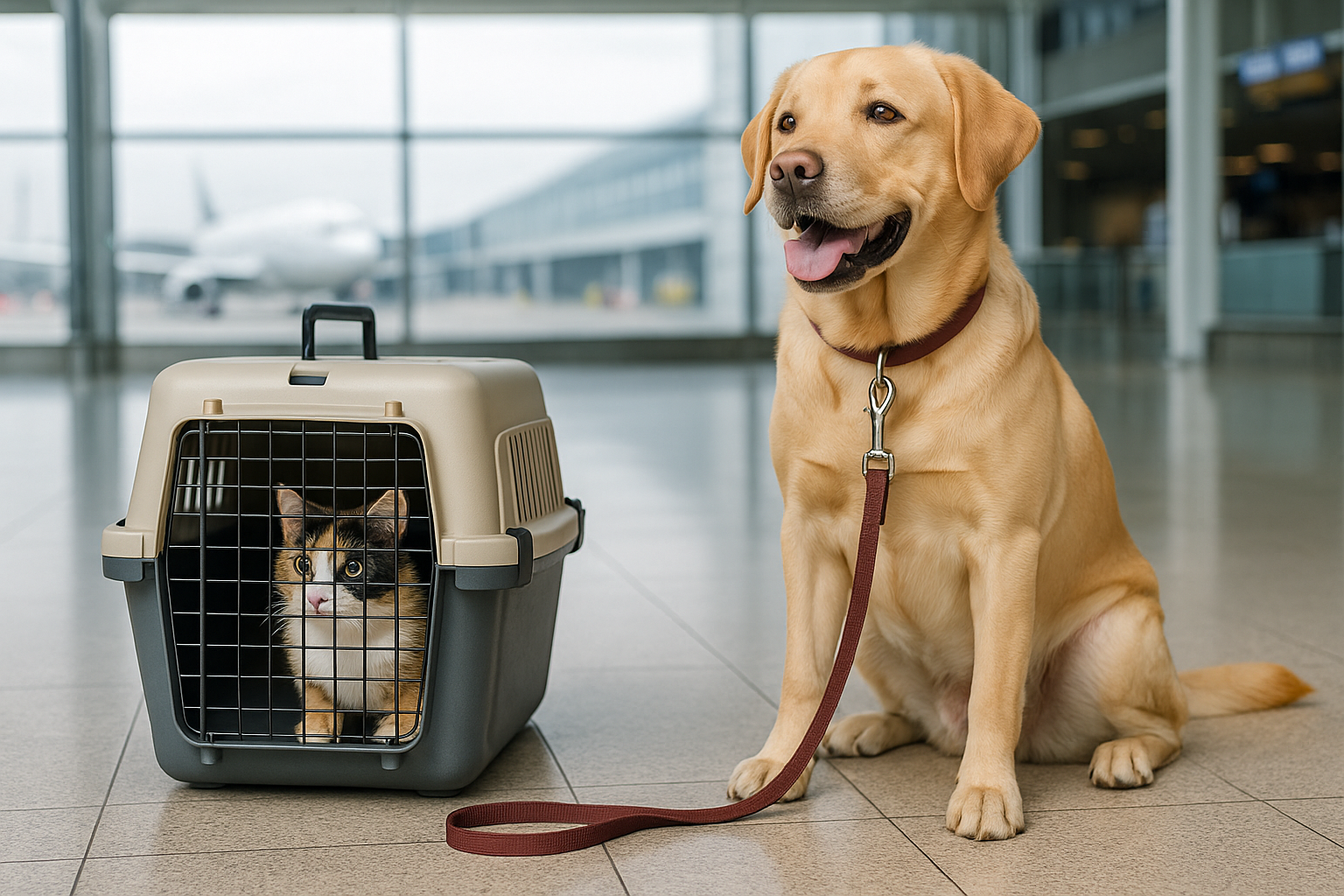
For many of us, our pets aren't just companions, they're family. So, when you're dreaming up your next adventure, it's totally understandable that you want to bring your furry, scaly, or feathered friend along for the ride!
The good news is that traveling with a pet can be a surprisingly smooth experience, but it takes preparation. This friendly guide breaks down the need-to-know rules for every part of your trip, from what documents to pack to how different transport modes handle animals. Get ready to plan clearly and confidently for your next pet-friendly getaway!
Which Pets Can Travel
Most transportation companies accept only a narrow list of household pets, and those policies are not consistent across airlines, trains, ferries, or international borders.
Dogs and cats are the most commonly accepted companions.
Some operators may also allow small rabbits, domestic birds, or ferrets, though this isn’t guaranteed.
More specialized pets for example, reptiles, amphibians, rodents, exotic mammals, and farm animals generally cannot travel on commercial transportation even if they can legally cross borders under certain conditions.
Because acceptance varies so widely, the safest approach is to check the specific travel company’s rules before you book anything.
Domestic vs. International Travel
Traveling with a pet inside your home country is usually much simpler.
Most domestic trips only require proof of vaccinations, a properly sized carrier or crate, and up-to-date ID tags or microchip information. There’s rarely a need for export or import documents.
International travel is more involved. Most countries require your pet to have an ISO-compatible microchip, a rabies vaccination given on a specific timeline, and an international health certificate issued shortly before travel. Some destinations—especially those with rabies-free status like Australia, New Zealand, Iceland, Japan, the United Kingdom, and Hawaii—have much stricter rules and may require long lead times or even quarantine.
If you are returning to the United States with a dog, be aware that CDC re-entry rules have recently become stricter. These rules cover microchipping, age requirements, vaccination timing, and import documentation. Always check official government guidance early in your planning process.
Travel by Air, Land, and Sea
Flying With a Pet
Air travel has the most detailed rules, and they vary by airline. Only small pets that can fit under the seat may fly in the cabin, and they must stay inside an airline-approved soft carrier for the entire flight. If you see a large dog in the cabin, it is almost always a trained service dog. Service dogs are allowed regardless of size because they perform tasks for passengers with disabilities. Emotional support animals no longer qualify as service animals and must follow the standard pet policy.
Pets that are too large to fly in the cabin may travel in the cargo hold if the airline allows it. Cargo travel requires an airline-approved hard-sided crate, proper labeling, ventilation, and compliance with breed and temperature restrictions. Many airlines suspend pet cargo travel during extreme heat or cold. When possible, a direct flight is the safest and least stressful option.
Airlines expect owners to provide accurate documentation and ensure their pets are healthy enough to travel. Carriers must follow their published procedures, but they generally limit liability for stress, illness, or issues not caused by mishandling.
Train Travel
Train rules vary from country to country. In the United States, Amtrak allows small dogs and cats on many routes as long as they stay in a carrier and meet size and weight limits. In Europe, dogs and cats are commonly accepted on trains, though larger dogs may require a ticket and may need to be leashed or muzzled. Most train systems do not accept exotic pets. Regardless of the route, owners are expected to manage their pets’ behavior and prevent disruptions to other passengers.
Car Travel
Traveling by car gives you the most flexibility. Pets should be safely secured in a crate or seat-belt harness, especially for long distances. Bring plenty of water, any medications your pet needs, and supplies for breaks along the way. Never leave a pet alone in a parked car, especially in warm weather. If your drive involves crossing an international border, all the same documentation requirements still apply.
Ferries, Boats, and Cruises
Short-distance ferries are often pet-friendly, allowing dogs and cats to stay in the vehicle or in designated onboard areas. Long-distance ferries may have kennel spaces or specific zones where pets are allowed, and international crossings may require documentation.
Most cruise ships do not allow pets at all. Trained service dogs are the exception, and the Queen Mary 2 is the only major ocean liner with a formal kennel program that accepts dogs and cats. On any vessel, owners are responsible for feeding, comfort, and proper documentation.
Documents You May Need
The paperwork required for pet travel depends entirely on where you’re going. For domestic trips, you may only need proof of vaccination and a compliant carrier. For international travel, requirements often include rabies certificates, microchip documentation, health certificates, USDA endorsements (for U.S. travelers), import permits, and proof of parasite treatments. It’s best to keep both printed and digital copies of all documents so you can provide them quickly when needed.
Responsibilities: What’s Yours and What’s The Carrier’s
Pet owners are responsible for making sure their animal is healthy, properly vaccinated, and traveling in an approved carrier. You must follow all breed, size, and weight rules and be prepared to manage your pet’s behavior throughout the journey.
Transportation companies are responsible for following their published procedures and providing safe conditions in designated pet areas. They generally limit liability for complications caused by pet stress, health issues, extreme weather, or incomplete paperwork. For this reason, verifying all requirements ahead of time is essential.
Understanding Your Pet’s Needs
Not every pet is comfortable traveling, and that’s okay. Before deciding to take your pet with you, think about their temperament. A pet that becomes anxious in new situations, is sensitive to noise, or dislikes confinement may struggle with the demands of travel. Consider how well they handle being around strangers, children, or other animals. Age, medical conditions, or breed-related breathing issues can also make travel harder or unsafe.
Routine matters too. Pets who are crate-trained and accustomed to new environments tend to travel more easily, while pets who rely heavily on predictable routines may become stressed.
When Bringing Your Pet Isn’t the Best Option
If your pet is likely to be stressed or unsafe during travel, there are good alternatives. Boarding facilities can work well for social pets who enjoy being around other animals. In-home pet sitters are a better fit for pets who prefer familiar surroundings or older pets who need a calm space. Friends or family members who already know your pet can also be a great option. For animals with medical needs, veterinary boarding ensures trained professionals are available if anything arises.
Recap
Travel with a pet always requires extra planning. Book early, since pet spaces can fill quickly. Check temperature restrictions for flights and look up pet relief areas at airports before you arrive. Keep documents organized and backed up digitally. Most importantly, confirm the rules for your destination and transportation company close to your travel date—policies change often. Never assume your pet will be accepted without checking the details first.