What To Do If You Get Sick or Injured While Traveling
There you are. You have just arrived. You feel great! You drop your luggage at the hotel and head out, ready to explore. Somewhere between the airport and dinner, you notice it. A slight scratch in the back of your throat. You ignore it.
The next morning, that scratch has turned into a sore throat. Your nose is running. Your energy is gone. You have gone from eating croissants in Paris or fish and chips in London to lying flat in your hotel room wondering how this happened.
No one plans to get sick on vacation. But it happens. A cold picked up on a long flight. Food poisoning from something that looked fine. A twisted ankle on uneven pavement. A migraine triggered by jet lag. Sometimes it is manageable. Sometimes it requires medical care. Being sick away from home feels different. You are outside your routine, your pharmacy, your doctor, and your support system.
Before You Leave: Preparation Matters
Travel insurance with medical and evacuation coverage is one of the most important pieces of international travel. Many domestic health plans do not cover treatment abroad. Even when they do, reimbursement can be limited. Medical evacuation from a cruise ship or remote area can cost tens of thousands of dollars.
Review destination health guidance well before departure. In the United States, the Centers for Disease Control and Prevention provides country specific health information at https://wwwnc.cdc.gov/travel, and the U.S. Department of State provides medical and safety information at https://travel.state.gov. If vaccines are recommended, schedule them early. Some require multiple doses spaced weeks apart.
Look up the local emergency number for your destination and save it in your phone. Not every country uses 911. If you are traveling through multiple countries, confirm the number in each.
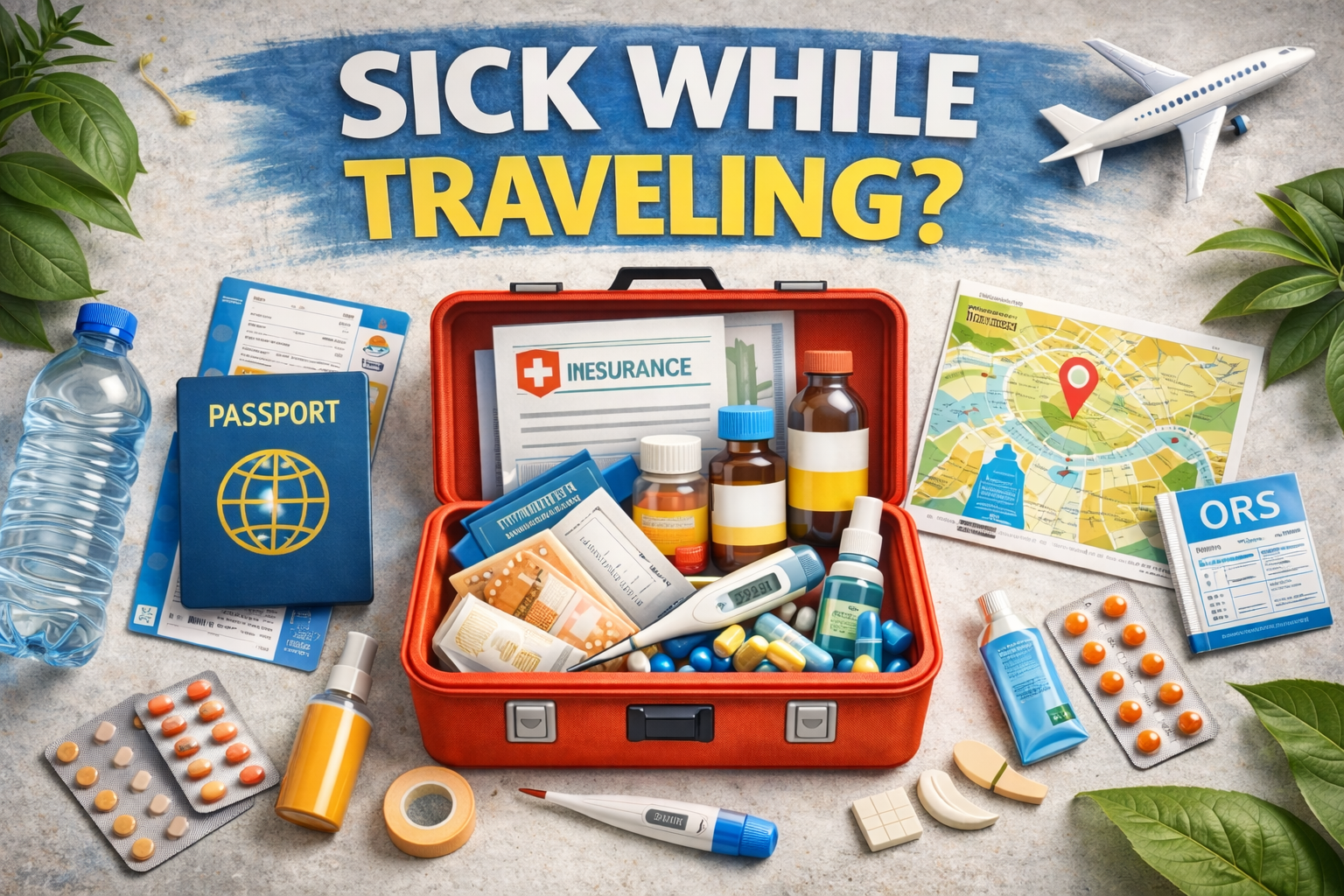
Pack a small but intentional medical kit. Include pain relievers, cold and allergy medication, anti diarrhea treatment, oral rehydration salts, blister care, antiseptic wipes, adhesive bandages, and prescription medications in original packaging. Bring slightly more medication than expected in case of delays.
Keep digital and printed copies of your passport, insurance policy, prescriptions, and emergency contacts. If your phone battery dies or is lost, having access to key information matters.
Medication Names and First Aid Supplies Differ by Country
Medications and first aid supplies are often sold under different names in different countries. What you know as Tylenol in the United States is the generic drug acetaminophen, which is called paracetamol in most other countries.
Ibuprofen may appear under brand names such as Nurofen in the United Kingdom and Australia, Brufen in parts of Europe and Asia, or Advil and Motrin in the United States. In many countries, it is also sold simply as ibuprofen with the milligram strength clearly listed on the packaging.
Diphenhydramine, known as Benadryl in the United States, may be packaged differently or require consultation with a pharmacist abroad. In some countries it is kept behind the counter rather than on open shelves. In others, the brand name Benadryl may refer to a different formulation entirely, such as a cough syrup that does not contain diphenhydramine. You may also find that antihistamines commonly sold over the counter in the United States are replaced by alternatives such as cetirizine or loratadine.
Even something as simple as an adhesive bandage may not be recognized if you ask for it by brand name. In many countries, it may be referred to as a plaster, sticking plaster, wound plaster, or simply a dressing depending on the region.
Knowing the generic name of the medication you use, along with the dosage, makes pharmacy visits far easier when you are not feeling well. It is also important to confirm that any prescription medications you carry are legal in your destination country. The International Narcotics Control Board provides general guidance on traveling with controlled medicines at https://www.incb.org.
If You Get Sick While Traveling Internationally
If you do become sick while traveling internationally, the first step is to assess the situation calmly. Mild symptoms may only require rest, hydration, and time. More serious symptoms such as high fever, severe dehydration, chest pain, difficulty breathing, confusion, or persistent vomiting require medical attention.
Hotel staff can often recommend reputable clinics or help arrange transportation. In many major cities, private hospitals and international clinics are accustomed to treating travelers. If you have travel insurance, contacting the emergency assistance number early can clarify where to go and how payment will work. In many countries, treatment must be paid for upfront. Keeping copies of receipts, prescriptions, and discharge paperwork is essential for reimbursement. U.S. citizens facing serious emergencies abroad can locate embassy or consulate assistance through https://travel.state.gov.
If You Get Sick on a Cruise
Cruise travel presents its own considerations. Cruise ships have onboard medical facilities staffed with trained professionals, but they function more like urgent care clinics than full hospitals. Reporting symptoms early is important, especially for contagious illnesses. Isolation may be required to protect other passengers.
The Centers for Disease Control and Prevention maintains cruise health information through its Vessel Sanitation Program at https://www.cdc.gov/nceh/vsp. Medical care onboard can be costly and is typically charged directly to your account. In the event of a serious emergency at sea, the ship’s medical team will stabilize you and coordinate evacuation if necessary.
Illness or injury during a shore excursion introduces another layer. If you are participating in an excursion booked directly through the cruise line, the tour operator typically coordinates with the ship if a medical issue arises. Cruise line sponsored excursions often have contingency plans, and the ship will generally wait if a medical emergency delays your return.
If you are on an independent excursion not booked through the cruise line, the responsibility shifts more heavily to you. In the event of injury, seek local medical care immediately rather than attempting to rush back to the ship. Serious conditions should always be stabilized first. Keep the ship informed as soon as possible through the emergency contact information provided in your cruise documents. If hospitalization is required and the ship must depart, the cruise line can assist with next steps, but you may be responsible for arranging transportation to the next port or returning home.
Before disembarking in any port, carry identification, your cruise card, travel insurance information, and the ship’s local port contact details. Knowing how to reach the ship’s port agent can make a significant difference if plans change unexpectedly.
Cruise travel combines international travel with fixed departure times. When an injury or illness occurs off the ship, prioritizing medical care first and logistics second is the safest approach.
Illness or Injury in Remote Areas
Illness or injury in remote areas requires even more awareness. Hiking, national parks, and outdoor excursions often take place far from immediate medical facilities. Before heading out, research trail conditions and weather forecasts. Carry sufficient water, sun protection, and basic first aid supplies. Let someone know your planned route and expected return time.
That last step is not optional. Share your route details, trail name, entry point, and expected return time with someone you trust. If plans change, update them. If you fail to check in, they should know when to alert authorities. Some travelers leave written plans with hotel staff or campground hosts when exploring remote areas.
Cell service cannot be assumed. In many parks and wilderness areas, there may be little to no reception. If you are hiking in a particularly remote location, consider carrying a personal locator beacon or satellite communication device. These devices can send distress signals even when there is no cell coverage. For longer backcountry trips, this added layer of communication can be critical.
If you are injured and unable to move safely, staying put may be safer than attempting to hike out. Conserve energy. Make yourself visible if possible. Use whistles or signal devices if you have them. Many parks have ranger stations and emergency response teams, but communication can be limited and response times vary depending on terrain and weather conditions.
The National Park Service provides safety information for U.S. parks at https://www.nps.gov. Fatigue and dehydration contribute to many preventable injuries, so pacing yourself is part of prevention.
In remote environments, preparation and communication are as important as physical endurance. Knowing how someone will know you are overdue can make the difference between a delayed hike and a prolonged emergency.
Getting Sick While Traveling Alone
Traveling alone adds another layer to all of this. Getting sick while traveling solo can feel more complicated simply because everything falls on you. If you need medication, you are the one walking to the pharmacy. If you need to see a doctor, you are the one arranging transportation. There is no one else in the room to make small decisions when you are tired.
Even routine tasks can feel harder when you are not feeling well, especially in a different country. Navigating unfamiliar streets, figuring out medication names, or explaining symptoms in another language takes more energy than it would at home.
If you begin feeling unwell while traveling alone, adjust early. Cancel plans before you are completely depleted. Let someone you trust know where you are staying and what is going on. Share your location, your symptoms, and your general plan. It does not need to be dramatic. It simply adds a layer of awareness.
Ask your accommodation for help if you need it. Hotel staff can recommend nearby clinics, arrange transportation, or point you toward a pharmacy. In some places, pharmacies offer delivery. There is no reason to make things harder than they need to be.
Keep important items within reach in your room. Water, medication, identification, insurance information, and your phone charger should all be easy to access. If you need medical care, having everything in one place makes leaving simpler.
If symptoms worsen or you feel too weak to manage safely on your own, contact emergency services or alert hotel staff. Acting early is usually easier than waiting.
Traveling alone means you are responsible for yourself, but it does not mean you have to manage everything without support. Sometimes the most practical decision is asking for assistance.
Food Poisoning While Traveling
Food related illness remains one of the most common travel health issues. It can be caused by bacteria, viruses, or parasites introduced through contaminated food or water. Improper food storage, undercooked meat or seafood, unwashed produce, untreated tap water, and even ice made from unsafe water can all contribute. In some destinations, differences in sanitation standards, refrigeration practices, or water treatment systems increase risk.
It is also worth noting that not every stomach issue is caused by unsafe food. Changes in diet, richer meals, unfamiliar spices, increased alcohol consumption, dehydration, and jet lag can all disrupt digestion. Sometimes your body is simply adjusting.
Precautions can reduce risk without eliminating the experience of eating locally. Choose food that is freshly cooked and served hot. Be cautious with raw or undercooked meat, seafood, and eggs. Wash or peel fruits yourself when possible. In areas where tap water is not considered safe, use bottled or properly treated water for drinking and brushing your teeth. Be mindful of ice and beverages diluted with local water. Wash hands frequently, especially before eating.
Street food is not automatically unsafe, but pay attention to turnover and cleanliness. Busy vendors with high customer volume often indicate fresher food. Observe food handling practices before ordering.
If symptoms develop, hydration becomes the priority. Vomiting and diarrhea can lead to dehydration quickly, especially in hot climates. Oral rehydration salts or electrolyte solutions help restore fluids and minerals. Rest and simple foods may allow mild cases to resolve within a couple of days.
Seek medical care if symptoms persist beyond a few days, worsen, include blood in stool, involve high fever, or prevent you from keeping fluids down. Children, older adults, and those with underlying health conditions should seek care earlier.
The World Health Organization provides food and water safety guidance for travelers at https://www.who.int.
Food is one of the best parts of travel. Taking reasonable precautions allows you to experience it fully while lowering the likelihood of it becoming the reason you miss the rest of your trip.
Key Takeaways
Preparation prevents panic. Review destination health guidance, purchase medical and evacuation coverage, and pack a small but intentional medical kit.
Know the generic names and dosages of your medications. Brand names vary widely by country, and clarity matters when you are already unwell.
Act early. Mild illness can often be managed with rest and hydration, but worsening symptoms require prompt medical attention.
Understand logistics. In many countries, payment is required before discharge, and communication barriers may exist. Keep documentation and emergency contacts accessible.
Prioritize medical care over schedule. Whether on a cruise, in a remote area, or during an excursion, stabilize the situation first and handle travel changes second.
If traveling alone, notify someone you trust and involve local staff when needed. Independence does not mean isolation.
For stomach illness, hydration is critical. Oral rehydration salts and electrolyte solutions can prevent minor illness from becoming severe.